Category:Children--1940s (film subject)
Children--1940s (film subject)
.

Son of the Navy (1940)

The Thief of Bagdad (1940)

How Green Was My Valley (1941)

Rudyard Kipling's Jungle Book (1942)

Aniki-Bóbó (Portugal, 1942)

The Pied Piper (1942)

Journey for Margaret (1942)

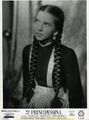
I bambuni ci guardano (Italy, 1943)

Jane Eyre (1943)

National Velvet (1944)

Tomorrow, the World! (1944)

The Curse of the Cat People (1944)

A Tree Grows in Brooklyn (1945)

The House I Live In (1945)

Our Vines Have Tender Grapes (1945)

Anchors Aweigh (1945)

Shoeshine (Italy, 1946)

Miracle on 34th Street (1946)

Record of a Tenement Gentleman (Japan, 1947)

Bush Christmas (Australia, 1947)

Miracle on 34th Street (1947)

Cuore (Italy, 1948)

Proibito rubare (Italy, 1948)

Ladri di biciclette (Italy, 1948)

Oliver Twist (1948)

The Boy with Green Hair (1948)
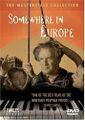
Somewhere in Euroe (Hungary, 1948)

The Fallen Idol (1948)

Germania anno zero (Italy, 1948)

The Search (1948)

Holiday Affair (1949)

The Window (1949)

The Secret Garden (1949)


.
.
- Category:Children--1890s (film subject)
- Category:Children--1900s (film subject)
- Category:Children--1910s (film subject)
- Category:Children--1920s (film subject)
- Category:Children--1930s (film subject)
- Category:Children--1940s (film subject)
- Category:Children--1950s (film subject)
- Category:Children--1960s (film subject)
- Category:Children--1970s (film subject)
- Category:Children--1980s (film subject)
- Category:Children--1990s (film subject)
- Category:Children--2000s (film subject)
- Category:Children--2010s (film subject)
- Category:Children--2020s (film subject)
.
Overview
Between 1940 and 1949, the representation of children in cinema underwent a profound psychological and ideological mutation, splitting into a stark thematic dichotomy between Hollywood’s studio-crafted escapism and the gritty, unyielding realism of European Neorealism. In the shadow of World War II, the cinematic child ceased to be a mere rassicurante instrument of musical comfort, evolving instead into a complex artistic canvas used to dissect severe psychological trauma, urban poverty, and the collapse of human morality.
The dominant feature of Hollywood during this decade was the professionalization of highly expressive, dramatic child stars who could translate adult-level anxiety onto the screen. Propelled by five-year-old Margaret O'Brien in Journey for Margaret (1942) and Meet Me in St. Louis (1944), studio films utilized deeply sensitive child actors to explore the raw terror of the London Blitz and psychological displacement. Concurrently, versatile stars like Roddy McDowall and a young Dean Stockwell anchored prestigious feature-length blockbusters such as How Green Was My Valley (1941) and The Boy with Green Hair (1948), shifting child acting styles away from the cheerful precociousness of the 1930s toward a mature, internalized performance methodology capable of driving suspenseful film noirs like Bobby Driscoll's The Window (1949) or carrying heavy wartime allegories like Skip Homeier's fanatical Nazi orphan in Tomorrow, the World! (1944).
Conversely, European cinema—led by Italy—orchestrated a monumental aesthetic revolution by completely rejecting professional studio children in favor of non-professional, untrained street youth. Masterpieces by Roberto Rossellini, Vittorio De Sica, and Luigi Comencini, including Shoeshine (1946) and Bicycle Thieves (1948) starring eight-year-old Enzo Staiola, positioned the child as a raw, documentary-style moral compass navigating the actual bombed-out cityscapes of post-war Rome and Naples. Rather than being saved by adults, these children functioned as silent, devastated witnesses to the ethical decay and economic despair of a fractured adult society. This international realism reached its most radical, chilling apex in Germany with Edmund Moeschke's haunting downward spiral in Germany, Year Zero (1948) and in Portugal with Manoel de Oliveira's playground survival drama Aniki-Bóbó (1942).
Finally, this cross-cultural obsession with childhood trauma permanently altered international cinema casting, legal protections, and genre expansion. In America, the independent docudrama The Quiet One (1948) utilized Donald Thompson to break entirely away from old vaudeville comedic caricatures, treating urban African-American childhood neglect with clinical, psychoanalytic rigor for the very first time. Simultaneously, European child actors like Ivan Jandl in The Search (1948) crossed borders to win special Juvenile Academy Awards, proving that the silent, cross-cultural vulnerability of an orphaned child could unite global postwar audiences.
Ultimately, by the close of 1949, the cinematic child had transitioned into a sophisticated multi-dimensional entity—one half a highly trained Hollywood box-office asset, the other a stark neorealist symbol of human mortality—flawlessly setting the stage for the intense, coming-of-age frontier struggles and psychological thriller tropes of the 1950s.
1940s
1940
- Feb 22, 1940 -- The Blue Bird (Lang), film -- Shirley Temple --
- <!> Mar 30, 1940 -- Son of the Navy (Nigh), film -- Martin Spellman --
- May 22, 1940 -- The Biscuit Eater (Heisler), film -- Billy Lee & Cordell Hickman --
- Dec 25, 1940 -- The Thief of Bagdad (Berger, Powell & Whelan), film -- Sabu --
- Dec 27, 1940 -- Young People (Dwan), film -- Shirley Temple -- Shirley Temple's final film as a genuine child star. She plays Wendy, an orphaned girl adopted by a vaudeville couple, in a story that consciously attempts to move her familiar child-star persona toward a more mature family drama. The film therefore marks an important endpoint in the classical Shirley Temple era.
1941
- <!!> Oct 28, 1941 -- How Green Was My Valley (Ford), film -- Roddy McDowall
1942
- Feb 13, 1942 -- On the Sunny Side (Schuster), film -- Roddy McDowall
- <!> Jul 08, 1942 -- The Pied Piper (Pichel), film -- Roddy McDowall & Peggy Ann Garner
- <!> Dec 17, 1942 -- Journey for Margaret (Van Dyke), film -- Margaret O'Brien
- <!> Dec 18, 1942 -- Aniki-Bóbó (de Oliveira), film -- Horácio Silva & Fernanda Matos
1943
- Mar 2, 1943 -- The Human Comedy (Brown), film -- Jackie "Butch" Jenkins
- May 26, 1943 -- My Friend Flicka (Schuster), film -- Roddy McDowall
- Oct 07, 1943 -- Lassie Come Home (Wilcox), film -- Roddy McDowall & Elizabeth Taylor
- <!> Oct 27, 1943 -- The Children Are Watching Us (De Sica), film -- Luciano De Ambrosis
- Dec 23, 1943 -- Lost Angel (Rowland), film -- Margaret O'Brien -- Margaret O'Brien plays Alpha, a six-year-old orphan raised by psychologists as an experimental prodigy. The film is built around her escape from the artificial world in which adults have attempted to manufacture an intellectual genius. It is an especially revealing example of the 1940s tendency to make the child's psychological development the central dramatic problem.
1944
- <!> Mar 02, 1944 -- The Curse of the Cat People (von Fritsch & Wise), film -- Ann Carter
- Jul 28, 1944 -- The Canterville Ghost (Dassin), film -- Margaret O'Brien
- <!> Nov 22, 1944 -- Meet Me in St. Louis (Minnelli), film -- Margaret O'Brien
- <!> Dec 14, 1944 -- National Velvet (Brown), film -- Elizabeth Taylor & Jackie 'Butch' Jenkins
- <!> Dec 29, 1944 -- Tomorrow, the World! (Fenton), film -- Skip Homeier
1945
- Feb 28, 1945 -- A Tree Grows in Brooklyn (Kazan), film -- Peggy Ann Garner & Ted Donaldson -- Peggy Ann Garner plays Francie Nolan, the adolescent girl at the center of Elia Kazan's adaptation of Betty Smith's novel, with Ted Donaldson as her younger brother Neeley. Garner's performance won the Academy Juvenile Award and represents a major shift toward psychologically and socially realistic representations of childhood. The film was also selected for the National Film Registry in 2010.
- <!> Jul 14, 1945 -- Anchors Aweigh (Sidney), film -- Dean Stockwell -- A vibrant, high-budget Technicolor MGM musical comedy famously remembered for combining live action with animation. A eight-year-old Dean Stockwell delivers a highly endearing, breakout performance as Donald Martin, a precocious, runaway young boy who wants to join the Navy, leading two sailors on leave (Frank Sinatra and Gene Kelly) on a chaotic chase across Hollywood to return him to his aunt. -- Eight-year-old Dean Stockwell plays Donald Martin, a runaway boy who becomes involved with Gene Kelly and Frank Sinatra's sailors. Stockwell's performance was an important early example of a very young actor functioning as a substantial comic and dramatic character within a major adult musical rather than in a specifically children's film.
- Sep 06, 1945 -- Our Vines Have Tender Grapes (Rowland), film -- Margaret O'Brien & Jackie "Butch" Jenkins -- Margaret O'Brien plays Selma Jacobson and Butch Jenkins plays Arnold Hanson in this rural family drama. The two children are not simply supporting decoration: they are the principal observers of the community's everyday adventures and conflicts. The film continued MGM's practice of placing established child stars at the center of adult-oriented family narratives.
1946
- <!!> Apr 02 or 27, 1946 -- Shoeshine (De Sica), film -- Franco Interlenghi & Rinaldo Smordoni -- A tragic and blistering masterpiece of Italian Neorealism that follows two young street boys in Rome working as shoeshine partners. Their dreams of buying a horse shatter when they get entangled in a petty crime ring and are sent to a harsh juvenile prison, brutally exploring the destruction of childhood innocence in a fractured post-WWII society. -- Two Roman shoeshine boys dream of buying a horse but become involved in a burglary and are sent to a juvenile prison. Franco Interlenghi and Rinaldo Smordoni were young, relatively inexperienced performers whose naturalistic performances became central to Vittorio De Sica's devastating portrait of postwar childhood. The film is a landmark in the transformation of the child performer from sentimental attraction into an instrument of social realism.
- Jul 18, 1946 -- Boys' Ranch (Rowland), film -- Jackie "Butch" Jenkins & Skip Homeier -- MGM's attempt to build a juvenile adventure around a group of disadvantaged boys living on a Texas ranch. Butch Jenkins plays the sympathetic young Butch, while Skip Homeier plays the more rebellious Skippy. The film is particularly useful for the history of the juvenile ensemble and for Jenkins's transition from supporting child performer to star billing.
- <!!> Sep 10 or 18, 1946 -- Paisan [Paisà] (Rossellini), film -- Alfonsino Pasca -- Roberto Rossellini's episodic Neorealist masterpiece tracking the Allied liberation of Italy. In the film’s iconic second segment set in Naples, non-professional child actor Alfonsino Pasca gives a raw, unforgettable performance as a streetwise shoeshine orphan who steals the boots of a drunk African-American military policeman, driving a deeply poignant exploration of post-war poverty and cross-cultural empathy. -- In the Naples episode of Rossellini's episodic Neorealist film, young Alfonsino Pasca plays a street urchin involved in the theft of boots from an American soldier. His non-professional performance is central to the episode's portrayal of poverty, survival, and the encounter between Italian children and Allied soldiers. The film premiered at Venice on September 18, 1946.
- Dec 18, 1946 -- The Yearling (Brown), film -- Claude Jarman Jr. -- A beautifully shot, heart-wrenching Technicolor adaptation of Marjorie Kinnan Rawlings' Pulitzer Prize-winning novel. Twelve-year-old Claude Jarman Jr. gives a deeply poignant breakout performance as Jody Baxter, a lonely pioneer boy in the 1870s Florida scrublands who must make a devastating coming-of-age choice regarding his beloved pet deer. -- Twelve-year-old Claude Jarman Jr., discovered through an MGM nationwide search, plays Jody Baxter, a pioneer boy whose attachment to a young deer becomes the center of a painful coming-of-age story. His performance won the Academy's special award for Outstanding Child Actor of 1946. The film is a major example of the postwar Hollywood search for a naturalistic yet fully professional child star.
- Dec 26, 1946 -- Great Expectations (Lean), film -- Tony Wager -- David Lean's universally acclaimed, highly atmospheric gothic adaptation of Charles Dickens' classic. Fourteen-year-old Tony Wager masterfully anchors the essential, tense opening chapters of the film, portraying the young orphan Pip as he encounters a desperate escaped convict in the misty marshes and navigates the decaying mansion of Miss Havisham. -- Fourteen-year-old Tony Wager plays young Pip in the opening section of David Lean's celebrated Dickens adaptation. His performance is particularly memorable because the film gives the child's encounter with Magwitch and Miss Havisham an atmosphere of Gothic terror and psychological intensity. Wager was selected from hundreds of applicants for the role.
1947
- <!> May 02, 1947 -- Miracle on 34th Street (Seaton), film -- Natalie Wood -- A universally beloved Christmas classic that captures a masterful performance by eight-year-old Natalie Wood. Wood brilliantly plays Susan Walker, a highly sophisticated and skeptical young girl raised not to believe in fairy tales or Santa Claus, whose cynicism is slowly melted by a kind old man claiming to be the real Kris Kringle. -- Eight-year-old Natalie Wood plays Susan Walker, the skeptical child whose gradual acceptance of Kris Kringle provides the emotional and thematic center of the story. The role is an important example of the child as the character through whom the audience's perception of an apparently impossible adult world is transformed.
- Jul 18, 1947 -- The Unfinished Dance (Koster), film -- Margaret O'Brien -- Margaret O'Brien plays a young ballet student whose jealousy and impulsiveness set the dramatic plot in motion. The film was explicitly constructed around O'Brien within MGM's child-star system and demonstrates the studio's attempt to give its young star increasingly sophisticated dramatic material.
- <!> Dec 17 or 22, 1947 -- Bush Christmas (Smart), film -- Chips Rafferty & John Fernside -- A foundational classic of early Australian family cinema produced by the Children's Entertainment Film movement. Shot on location in the Blue Mountains, the suspenseful adventure follows a close-knit group of five country children who track a pair of horse thieves across a harsh wilderness to retrieve their father's stolen mare before Christmas Day. -- An Australian children's adventure film following five country children who pursue horse thieves through the Blue Mountains. Produced within the developing Australian children's-film movement, the film is important for showing that the juvenile ensemble had become an international cinematic form rather than a purely Hollywood phenomenon. Production documentation identifies the five children as central to the film's conception.
1948
- <!!> Mar 26, 1948 -- The Search (Zinnemann), film -- Ivan Jandl -- A devastating, highly influential post-war drama filmed amidst the actual ruined cityscapes of occupied Germany. Seven-year-old non-professional actor Ivan Jandl delivers an incredibly raw, heart-wrenching performance as a mute, traumatized Czech boy fleeing a refugee camp who is befriended by a sympathetic American soldier (Montgomery Clift) while his mother frantically searches for him, earning a special Juvenile Academy Award for his work. -- Nine-year-old Czech child actor Ivan Jandl plays Karel Malik, a traumatized war orphan separated from his mother in postwar Germany. Jandl was a non-professional performer who did not speak English and learned his dialogue phonetically. His performance won the Academy Juvenile Award and is one of the clearest examples of the postwar transformation of the child performer into a vehicle for historical memory and trauma.
- <!!> Jun 22 or 28, 1948 -- Oliver Twist (Lean), film -- John Howard Davies -- A seminal British drama celebrated for its atmospheric, noir-influenced Gothic visual style recreating the grim reality of Victorian London slums. Nine-year-old John Howard Davies gives a beautifully innocent, touching performance as the titular orphan navigating a cruel workhouse before falling into a dangerous pickpocketing street gang -- Nine-year-old John Howard Davies plays the title character in David Lean's atmospheric Dickens adaptation. The film places the child at the center of a dark, visually expressionistic reconstruction of Victorian poverty and criminality. Davies's Oliver is one of the most important British child performances of the decade. The film premiered in London on June 28, 1948.
- <!> Sep 10, 1948 -- Proibito rubare [Hey Boy] (Comencini), film -- Non-professional youth ensemble -- Directed by Luigi Comencini and shot on location in post-war Naples. This poignant drama tracks a young missionary priest whose suitcase is stolen at the train station; his frantic search leads him deep into the impoverished backstreets, where encountering a tight-knit community of street urchins (scugnizzi) forces him to abandon his mission to Africa to build a local boys' shelter instead. -- Luigi Comencini's first feature, shot among the poor of postwar Naples, follows a priest whose encounter with the city's street children changes the direction of his life. The film is important as an Italian example of the emerging idea that children from the social environment being represented could provide a distinctive form of cinematic authenticity.
- <!!> Nov 16, 1948 -- The Boy with Green Hair (Losey), film -- Dean Stockwell -- Joseph Losey's unique, allegorical Technicolor drama that serves as a powerful anti-war fable. Dean Stockwell delivers a striking, mature performance as Peter, a young war orphan who wakes up one morning to find his hair has mysteriously turned a vibrant shade of green, instantly transforming him into a targeted pariah while forcing him to carry a symbolic psychological message about the horrors of war. -- Twelve-year-old Dean Stockwell plays Peter Fry, a war orphan whose hair mysteriously turns green and makes him the target of social hostility. The film uses the child as the central figure in an allegorical anti-war and anti-conformist narrative. Stockwell's performance belongs to the increasingly serious postwar tradition of psychologically complex child characters.
- <!!> Nov 24, 1948 -- Bicycle Thieves (De Sica), film -- Enzo Staiola -- A universally revered cinematic masterpiece shot on location in post-war Rome. Eight-year-old Enzo Staiola anchors the film's moral compass as Bruno, walking tirelessly alongside his desperate, impoverished father through the city streets in a frantic search for a stolen bicycle crucial to their survival. -- Eight-year-old Enzo Staiola plays Bruno, the son who accompanies his father through postwar Rome in search of a stolen bicycle. Bruno gradually becomes the emotional and moral center of the film, culminating in the devastating final walk home. Staiola's non-professional performance is one of the defining examples of the child as an instrument of Neorealist authenticity.
- <!!> Dec 01, 1948 -- Germany, Year Zero [Germania anno zero] (Rossellini), film -- Edmund Moeschke -- Roberto Rossellini's devastating, bleak Neorealist tragedy filmed amidst the bombed-out rubble of occupied Berlin. Twelve-year-old non-professional child actor Edmund Moeschke delivers a haunting, raw performance as Edmund Köhler, a desperate boy who scavenges the streets to feed his sick family, eventually collapsing under the weight of severe moral corruption and despair. -- Twelve-year-old Edmund Moeschke plays Edmund Köhler, a boy struggling to survive among the ruins of postwar Berlin. Rossellini uses his physical movement through the destroyed city as a way of representing the moral and psychological devastation of the adult world. The film represents one of the most radical uses of a child as the central consciousness of a historical tragedy.
- <!!> Dec 11, 1948 -- The Fallen Idol (Reed), film -- Bobby Henrey -- A masterfully crafted British suspense drama and psychological mystery written by Graham Greene. Eight-year-old Bobby Henrey gives an extraordinarily naturalistic performance as Philippe, a lonely foreign ambassador's son left in a grand London embassy who accidentally witnesses a fatal fall and inadvertently implicates his beloved, idolized butler (Ralph Richardson) in murder while trying to protect him. -- Eight-year-old Bobby Henrey plays Philippe, the son of a diplomat who believes that his beloved butler is implicated in murder. The entire mystery is filtered through Philippe's limited understanding of adult behavior. The film is therefore a particularly sophisticated example of the child not merely appearing in the story but determining the audience's access to it.
- Dec 11, 1948 -- The Quiet One (Meyers), film -- Donald Thompson -- A highly acclaimed, Oscar-nominated American independent docudrama written by James Agee that serves as a landmark exploration of child psychology. Ten-year-old non-professional African-American child actor Donald Thompson delivers a deeply internalized, silent, and emotionally raw performance as Donald Peters, a severely neglected, traumatized Harlem youth undergoing psychiatric rehabilitation, breaking entirely away from old Hollywood comedic stereotypes to treat urban childhood trauma with clinical rigor. -- Ten-year-old Donald Thompson plays Donald Peters in this semi-documentary drama about a severely neglected Harlem child undergoing psychological rehabilitation. Thompson was a non-professional African-American child performer, and the film's treatment of childhood trauma is strikingly different from the comic and sentimental stereotypes common in earlier Hollywood cinema. The film received two Academy Award nominations.
1949
- Jan 19, 1949 -- So Dear to My Heart (Schuster & Luske), film -- Bobby Driscoll -- Bobby Driscoll plays Jeremiah Kincaid, the young boy at the center of this Disney rural family story. Together with The Window, the film established Driscoll as one of the most important new American child stars at the end of the decade. His performances in the two films were recognized with the Academy Juvenile Award for outstanding juvenile actor of 1949.
- <!!> May 17, 1949 -- The Window (Tetzlaff), film -- Bobby Driscoll -- A gripping, suspenseful film noir shot on location in New York City. Nine-year-old Bobby Driscoll delivers a masterclass in terror as Tommy, a young boy notorious for telling tall tales who witnesses a real murder but cannot get his parents or the police to believe him, leaving him entirely at the mercy of the killers. -- Nine-year-old Bobby Driscoll plays Tommy Woodry, a boy whose reputation for telling stories causes nobody to believe him when he witnesses a real murder. The entire suspense mechanism depends upon the child's credibility and vulnerability. It is one of the clearest examples of a child performer carrying an adult genre film—in this case, film noir/thriller—almost entirely on his own.
- <!> Apr 15, 1949 -- The Secret Garden (Wilcox), film -- Margaret O'Brien & Dean Stockwell -- A lavish MGM adaptation of Frances Hodgson Burnett's classic novel, uniquely transitioning from black-and-white into Technicolor for its garden sequences. Margaret O'Brien stars as the sour orphan Mary Lennox alongside Dean Stockwell as her sickly, bedridden cousin Colin, delivering highly expressive dramatic performances as they heal their psychological traumas together. -- Margaret O'Brien plays Mary Lennox and Dean Stockwell plays Colin Craven in MGM's adaptation of Frances Hodgson Burnett's novel. The two children are the true protagonists: their isolation, friendship, and psychological transformation provide the structure of the story. The film is also one of the last major MGM child-star vehicles centered on O'Brien.
- <!> Oct 10, 1949 -- Intruder in the Dust (Brown), film -- Claude Jarman Jr. -- Claude Jarman Jr. plays Chick Mallison, the young boy who becomes involved in the defense of Lucas Beauchamp, an African-American man accused of murder. Jarman was born in September 1934 and was still fourteen during the production of the film, although he turned fifteen before its release. I would retain it under our criterion because the performance itself belongs to his child-actor period. The film is particularly important because it uses a young white protagonist as a witness to the racial injustice of the Jim Crow South.
- <!> Nov 23, 1949 -- Holiday Affair (Hartman), film -- Gordon Gebert -- A charming, beloved RKO romantic comedy-drama set during a bustling Christmas season in New York. Six-year-old child actor Gordon Gebert delivers a highly natural, scene-stealing performance as Timmy Enfield, a sharp young boy who plays a central matchmaking role in his widowed mother's life while fiercely defending a toy train set, serving as the emotional anchor of the film. -- Eight-year-old Gordon Gebert plays Timmy Enfield, the young son of Janet Leigh's widowed mother. Although the principal story is an adult romantic comedy, Timmy has a substantial dramatic and comic role and becomes an important link between the two adult protagonists. Gebert's performance represents the continuing Hollywood tradition of using a very young performer as an emotional catalyst within an adult narrative.
Media in category "Children--1940s (film subject)"
The following 108 files are in this category, out of 108 total.
 1922-1944 Roach (serial).jpg 494 × 700; 81 KB
 1940.jpg 225 × 225; 4 KB
 1940 Barton (film) 2.jpg 258 × 387; 96 KB
 1940 Barton (film).jpg 253 × 380; 65 KB
 1940 Biancoli (film).jpg 500 × 750; 44 KB
 1940 Cahn (short) 2.jpg 350 × 500; 37 KB
 1940 Cahn (short).jpg 257 × 388; 29 KB
 1940 Heisler (film).jpg 580 × 888; 149 KB
 1940 Kahn (film).jpg 350 × 500; 62 KB
 1940 Lang (film).jpg 258 × 386; 29 KB
 1940 Ludwig (film).jpg 265 × 374; 36 KB
 1940 McCarey (film).jpg 258 × 387; 93 KB
 1940 McLeod (film).jpg 261 × 400; 55 KB
- 1940 Nigh (film).jpg 440 × 713; 103 KB
- 1940 Powell (film).jpg 255 × 389; 35 KB
 1940 Stevenson (film).jpg 350 × 500; 51 KB
 1941 Beaudine (film).jpg 258 × 386; 97 KB
 1941 Cahn (short) 2.jpg 440 × 666; 95 KB
 1941 Cahn (short).jpg 350 × 500; 33 KB
 1941 Dreifuss (film).jpg 260 × 382; 25 KB
- 1941 Ford (film).jpg 440 × 660; 123 KB
 1941 Kahn (film).jpg 350 × 444; 55 KB
 1941 Kenton (film).jpg 254 × 392; 104 KB
 1941 Kowa (film).jpg 708 × 1,000; 133 KB
 1941 Lang (film).jpg 234 × 350; 55 KB
 1941 Murphy (film).jpg 350 × 494; 62 KB
 1941 Taurog (film).jpg 440 × 658; 94 KB
 1941 Thorpe (film).jpg 257 × 387; 30 KB
 1942 Christensen (film).jpg 240 × 359; 74 KB
 1942 Kane (film).jpg 257 × 387; 31 KB
- 1942 Korda (film).jpg 256 × 389; 25 KB
 1942 Luby (film).jpg 350 × 500; 75 KB
 1942 Norman (film).jpg 378 × 546; 160 KB
- 1942 Oliveira (film).jpg 1,000 × 1,520; 117 KB
 1942 Ozu (film).jpg 496 × 700; 60 KB
- 1942 Pichel (film).jpg 235 × 355; 50 KB
 1942 Root (film).jpg 350 × 500; 44 KB
 1942 Rosen (film).png 258 × 387; 199 KB
 1942 Schuster (film).jpg 265 × 375; 24 KB
 1942 Thorpe (film) 2.jpg 258 × 385; 37 KB
 1942 Thorpe (film).jpg 262 × 400; 42 KB
- 1942 Van Dyke (film).jpg 353 × 500; 34 KB
 1943 Bennet (film).jpg 183 × 275; 13 KB
 1943 Brown (film).jpg 256 × 389; 28 KB
 1943 Calzavara (film).jpg 458 × 610; 59 KB
- 1943 De Sica (film).jpg 270 × 368; 19 KB
 1943 Dmytryk (film).jpg 1,000 × 1,510; 137 KB
 1943 Gramantieri (film).jpg 1,000 × 1,344; 121 KB
 1943 Salkow (film).jpg 257 × 388; 95 KB
 1943 Schuster (film).jpg 255 × 389; 30 KB
- 1943 Stevenson (film).jpg 256 × 389; 26 KB
 1943 Thiele (film) 1.jpg 259 × 385; 38 KB
 1943 Thiele (film) 2.jpg 255 × 389; 28 KB
 1943 Wilcox (film).jpg 440 × 663; 88 KB
- 1944 Brown (film).jpg 440 × 666; 107 KB
 1944 Dassin (film).jpg 259 × 385; 40 KB
- 1944 Fenton (film).jpg 214 × 317; 22 KB
 1944 Ferroni (film).jpg 500 × 723; 81 KB
 1944 Gerron (doc).jpg 190 × 281; 8 KB
 1944 Minnelli (film).jpg 440 × 666; 100 KB
- 1944 Wise (film).jpg 440 × 661; 109 KB
 1945.jpg 225 × 225; 4 KB
- 1945 Kazan (film).jpg 440 × 657; 129 KB
- 1945 LeRoy (film).jpg 257 × 387; 25 KB
 1945 Neumann (film).jpg 259 × 385; 39 KB
- 1945 Rowland (film).jpg 255 × 391; 22 KB
- 1945 Sidney (film).jpg 255 × 391; 30 KB
 1946 Bacon (film).jpg 500 × 750; 74 KB
 1946 Brown (film) 2.jpg 280 × 355; 21 KB
- 1946 De Sica (film).jpg 284 × 368; 34 KB
- 1946 Disney (film).jpg 255 × 385; 57 KB
 1946 Lean (film).jpg 250 × 399; 28 KB
 1946 Neumann (film).jpg 259 × 383; 37 KB
 1946 Rowland (film).jpg 350 × 500; 88 KB
 1946 Saville (film).jpg 350 × 500; 65 KB
 1946 Wilcox (film).jpg 200 × 303; 37 KB
 1947 Neumann (film).jpg 550 × 800; 519 KB
- 1947 Ozu (film).jpg 396 × 594; 27 KB
- 1947 Safran (film).jpg 361 × 500; 53 KB
- 1947 Seaton (film).jpg 440 × 674; 120 KB
 1947 Selander (film).jpg 255 × 390; 30 KB
 1947 Waters (film).jpg 1,000 × 1,500; 125 KB
- 1948 Coletti - De Sica (film).jpg 771 × 1,000; 209 KB
- 1948 Comencini (film).jpg 666 × 947; 106 KB
- 1948 De Sica (film).jpg 220 × 317; 134 KB
 1948 Flaherty (film).jpg 440 × 665; 99 KB
 1948 Ford (film).jpg 440 × 617; 67 KB
 1948 Godfrey (film).jpg 1,152 × 1,755; 540 KB
 1948 Gross film.jpg 209 × 288; 23 KB
 1948 King (film).jpg 200 × 310; 22 KB
- 1948 Lean (film).jpg 257 × 387; 29 KB
- 1948 Losey (film).jpg 253 × 392; 26 KB
 1948 Meyers (doc).jpg 264 × 377; 23 KB
- 1948 Radvanyi (film).jpg 354 × 500; 56 KB
- 1948 Reed (film).jpg 440 × 665; 103 KB
- 1948 Rossellini (film).jpg 259 × 384; 27 KB
 1948 Shimizu (film).jpg 460 × 690; 284 KB
 1948 Taurog (film).jpg 257 × 388; 52 KB
- 1948 Zinnemann film.jpg 245 × 445; 28 KB
 1949 Brown (film).png 267 × 372; 146 KB
 1949 Gong - Ming (film).jpg 272 × 365; 31 KB
- 1949 Hartman (film).jpg 251 × 395; 26 KB
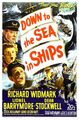 1949 Hathaway (film).jpg 1,000 × 1,513; 252 KB
 1949 Pelissier (film).jpg 350 × 500; 31 KB
- 1949 Tetzlaff (film).jpg 250 × 399; 27 KB
- 1949 Wilcox (film).jpg 259 × 385; 29 KB
 1949-1952 Cahan (TV series).jpg 1,000 × 1,415; 135 KB
 1949-1956 Berg (TV series).jpg 267 × 373; 27 KB


