Category:Children--1910s (film subject)
Children--1910s (film subject)
.

The Land Beyond the Sunset (1912)

Little Mary Sunshine (1916)
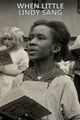
When Little Lindy Sang (1916)

La guerra ed il sogno di Momi (1917)

Tarzan of the Apes (1918)


.
.
- Category:Children--1890s (film subject)
- Category:Children--1900s (film subject)
- Category:Children--1910s (film subject)
- Category:Children--1920s (film subject)
- Category:Children--1930s (film subject)
- Category:Children--1940s (film subject)
- Category:Children--1950s (film subject)
- Category:Children--1960s (film subject)
- Category:Children--1970s (film subject)
- Category:Children--1980s (film subject)
- Category:Children--1990s (film subject)
- Category:Children--2000s (film subject)
- Category:Children--2010s (film subject)
- Category:Children--2020s (film subject)
.
Overview
. Between 1910 and 1919, the presence of children in cinema underwent a profound transformation, shifting from uncredited functional roles into a highly professionalized cornerstone of the newly born Hollywood studio and star system. As films grew into full-length features, the decade witnessed the birth of the first major child stars, a boom in grand children's fantasy literature adaptations, and a sharp focus on progressive social realism.
A defining feature of this decade was the commercial breakthrough of star billing and specialized typecasting for young performers. The industry moved decisively from anonymous ensembles to marketing individual child identities, famously launched by five-year-old Baby Marie Osborne in Little Mary Sunshine (1916). Concurrently, prolific actors like Gordon Griffith established the archetype of the athletic, rugged boy hero in blockbusters like Little Sunset (1915) and Tarzan of the Apes (1918), proving that children could successfully carry the dramatic and physical weight of feature-length studio narratives.
Alongside genuine child actors, a massive cultural phenomenon emerged with adult superstars portraying children. Driven by Mary Pickford, this trend saw petite adult actresses utilize oversized, forced-perspective furniture sets to masterfully play pre-adolescents in masterpieces like The Poor Little Rich Girl (1917) and The Little Princess (1917). These dual modes of performance—the naturalism of actual children and the stylized virtuosity of adults playing kids—fueled a golden era of high-budget cinematic fantasies and fairytales, highlighted by Maurice Maeterlinck's avant-garde The Blue Bird (1918) and the all-child spectacle Aladdin and the Wonderful Lamp (1917).
Crucially, the decade saw children weaponized on screen as potent catalysts for progressive social advocacy and national identity. Masterpieces like The Cry of the Children (1912) integrated raw, documentary-style factory footage to turn a child's suffering into a furious political rallying cry for child labor reform. This period also birthed milestone representations of marginalized youth, including the cinematic debut of Ernest "Sunshine Sammy" Morrison—Hollywood's first Black child star—and the rare, progressive look at classroom integration in When Little Lindy Sang (1916). Internationally, children's perspectives became a canvas for experimental filmmaking, seen in the historic stop-motion animation of Italy's La guerra ed il sogno di Momi (1917) or the gritty independent realism of Norway's survival drama Historien om en gut (1919).
Ultimately, by the close of 1919, the cinematic child had transitioned from an accidental 19th-century novelty into a highly lucrative artistic entity. Children were now relied upon to soften cynical adult characters, critique societal greed, and draw massive global box-office audiences, perfectly priming the landscape for the global child-superstar explosion of the 1920s.
Note -- Great Expectations (1917) and Little Orphant Annie (1918) featured adult actors (like Jack Pickford or Colleen Moore) playing teenagers. Titles like The Secret Garden (1918) and A kis lord (Hungary, 1918) are historically interesting but do not possess the monumental industry footprint or critical survival status of The Cry of the Children or Historien om en gut.
Top films (year by year)
1910
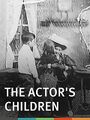
- Mar 15, 1910 -- The Actor's Children (O'Neil), film -- Orilla Smith & Yale Boss
1911
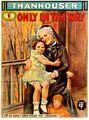
- Jan 31, 1911 -- Only in the Way (Thanhouser), film -- Marie Eline
- Apr 24, 1911 -- As a Boy Dreams (Ince), film -- Jack Pickford & Mary Pickford
- May [01], 1911 -- Air Bubbles [Le bolle di sapone] (Vitrotti), film -- Maria Bay
- Oct 17, 1911 -- David Copperfield (Nichols), film -- Flora Foster & Marie Eline
- Dec 22, 1911 -- Il tamburino sardo (Paradisi), film -- Uncredited boy
1912
- Mar 15, 1912 -- Falling Leaves (Guy-Blache), film -- Magda Foy
- Apr 30, 1912 -- The Cry of the Children (Nichols), film -- Marie Eline
- Oct 28, 1912 -- The Land Beyond the Sunset (Shaw), film -- Martin Fuller
- Nov 1, 1912 -- The Little Girl Next Door (Henderson), film -- Marion Fairbanks & Madeline Fairbanks
1913
- Jan 10, 1913 -- The Evidence of the Film (Marston & Thanhouser), film -- Marie Eline -- Directed by Lawrence Marston and Edwin Thanhouser for the Thanhouser Film Corporation. The narrative tracks a young, hard-working messenger boy who is maliciously framed by a corrupt broker for stealing $20,000 in bonds. The entire structural plot relies on the child's desperate predicament, culminating in an innovative resolution where a casual piece of film stock accidentally captured by an outdoor camera crew proves his innocence. The short is highly valuable to performance history: it offers a prominent cross-gender trousers role for star Marie Eline, serving as empirical proof of her versatility and disciplined dramatic range. It was formally selected for preservation in the US National Film Registry in 2001. <EXTANT; online YES; music YES>
- Jan 14, 1913 -- The Tiniest of Stars (Thanhouser), film -- Marie Eline & Helen Badgley -- Produced by the Thanhouser Film Corporation and directed by leading man James Cruze. This domestic show-business drama centers on a young brother and sister who take to the vaudeville variety stage to support their sickly, destitute mother after their musician father vanishes on the road. Marie Eline plays the older brother while toddler Helen Badgley portrays the baby sister. Thanhouser intentionally marketed the short around the specific personas of its juvenile players—explicitly billing them under their famous studio monikers, "The Thanhouser Kid" and "The Thanhouser Kidlet". Contemporary trade materials cite this film as definitive evidence of the emerging studio star system, where audience demand shifted from generic child characters toward specific, recurring juvenile personalities. <EXTANT; online YES; music YES>
- Sep 17, 1913 -- L'Enfant de Paris / The Child of Paris (Perret), film -- Suzanne Privat -- Directed and written by Léonce Perret for the Gaumont company. This monumental French silent feature follows a long chain of tragic misfortunes that befall a young girl, Marie-Laure de Valen, whose army captain father is reported missing in action. After her mother dies of sudden grief, she is sent to a harsh boarding school, runs away, and is kidnapped by an opportunistic Parisian criminal who forces her to live as a mistreated slave in the home of a drunken cobbler. She forms a deep, protective bond with Bosco, the cobbler's teenage hunchback apprentice, who eventually launches a high-stakes cross-country rescue pursuit across Nice when the kidnapper flees with the child. Starring child actress Suzanne Privat, this two-hour production is a landmark achievement in early global cinema, using deep-focus multi-room staging, low-angle tracking, and sophisticated backlighting to position a child actor as a deep vehicle for epic cinematic melodrama. <EXTANT; online YES; music YES>
1914
- Jan 14, 1928 -- Le Roman d'un mousse / The Curse of Greed (Perret), film -- Adrien Petit -- Directed by Léonce Perret for the Gaumont company. This sophisticated French multi-reel feature tracks a ruthless moneylender who blackmails a bankrupt marquis into marrying a wealthy widow, planning to assassinate her and her young son, Charles-Henri, to seize their estate. The boy is covertly kidnapped and placed aboard a deep-sea fishing vessel with the explicit intent of orchestrating a fatal "accident" at sea, but he is protected by a sympathetic old fisherman. Starring child actor Adrien Petit as the vulnerable cabin boy, the production stands as an exceptional showcase of Perret’s advanced staging grammar, combining expressive deep-focus seascape cinematography with heavy dramatic text framing to position a juvenile lead at the visual center of a high-stakes crime melodrama. <EXTANT; online YES; music YES>
- Jan 29, 1914 -- Little Billy's Triumph (Thornby), film -- (Thornby), film -- Billy Jacobs & Gordon Griffith -- Produced by Mack Sennett for Keystone Studios and directed by Robert Thornby. This rapid silent comedy centers on three-year-old child prodigy Billy Jacobs (billed as Little Billy), whose hard-earned dime is stolen by a duo of neighborhood bullies to fund a puppet show enterprise. Billy outsmarts his older tormentors by covertly snatching their admission box and securing justice with the assistance of a local beat policeman. While a young Gordon Griffith co-stars as one of the neighborhood children, Jacobs anchors the titular physical comedy. Preserved by the Academy Film Archive in 2010, this short is historically significant for documenting the industry's systematic shift toward cultivating toddler-aged specialty slapstick performers to drive repeatable studio comedy franchises. <EXTANT; online YES; music YES>
- Mar 23, 1914 -- Det hemmelighedsfulde X AKA Sealed Orders / The Mysterious X (Christensen), film -- The brilliant directorial debut of Benjamin Christensen for the Dansk Biograf Kompagni, celebrated as a technical and stylistic masterpiece of early global silent cinema. This gripping military espionage thriller utilizes child actors Otto Reinwald and Bjørn Spiro as the young sons of a naval lieutenant who is wrongfully accused of treason and sentenced to death. The director meticulously constructs intense cross-cut suspense by showing the children unknowingly wandering into the geometric, shadow-laden crossfire of real spies, secret passages, and stolen military codes. The film remains historically monumental for its innovative use of low-key silhouette lighting, complex blocking, and deep interior camera depth to weaponize childhood innocence as a vehicle for psychological cinematic tension. <EXTANT; online YES; music YES>
- Aug 08, 1914 -- One Touch of Nature (Miller), film -- Andy Clark -- Directed by Ashley Miller for the Thomas A. Edison Manufacturing Company. The single-reel sentimental comedy tracks an irritable, cynical elderly man who encounters Freckles, a highly spirited and uninhibited young boy wandering through the woods. Young Andy Clark’s naturalistic, highly energetic performance anchors the emotional transformation of the adult protagonist, using the raw physicality of childhood play to dissolve the man's misanthropic outlook. This surviving short, held in the archival master collections of the Museum of Modern Art, is historically valuable to child performance research for illustrating how Edison systematically integrated naturalistic child behavior to challenge the theatrical staging conventions of contemporary studio releases. <EXTANT; online YES; music YES>
- Nov 1, 1914 -- Shep's Race with Death (Harvey), film -- Marion Fairbanks, Madeline Fairbanks & Shep the Dog -- Directed by Jack Harvey for the Thanhouser Film Corporation. This domestic adventure drama serves as a showcase for the studio's famous canine star, Shep the Collie, alongside the heavily marketed "Thanhouser Twins," Marion and Madeline Fairbanks. The artificial, multi-scene plot involves a grandmother who arbitrarily favors one twin over the other, sparking a series of domestic misunderstandings that lead to a dramatic family separation. The narrative reaches its high-stakes climax when a runaway horse-and-buggy leaves one child stranded on a railway track, forcing Shep to intercept the animal seconds before a speeding locomotive arrives. Preserved by the Museum of Modern Art, the film is an invaluable academic record illustrating the continuity of Thanhouser's highly calculated "Kids and Dogs" studio formula to secure long-term consumer brand loyalty. <EXTANT; online YES; music YES>
1915
- May 06, 1915 -- Little Sunset (Bosworth), lost film -- Gordon Griffith -- Produced by the Oliver Morosco Photoplay Company and released by Paramount Pictures. Written by Charles E. Van Loan and directed by industry pioneer Hobart Bosworth, this four-reel sports melodrama stars seven-year-old Gordon Griffith as the red-haired, fiery-tempered "Little Sunset" Jones. Following his mother's sudden death, the boy becomes the traveling mascot for the "Apaches" baseball team, forging a deep paternal bond with the squad's aging star centerfielder, Gus Bergstrom (played by Bosworth). When the child falls dangerously ill, Gus spirals into a depressive performance slump and abruptly quits the team, leaving the boy disillusioned until a final championship reconciliation restores their bond. While the film is officially lost due to nitrate decomposition, it stands as an exceptional academic milestone: it is recognized by film historians as the very first dramatic feature-length motion picture in United States history to center its entire narrative arc around a child protagonist, demonstrating that a juvenile lead could carry a feature-length studio production.
- Nov 15, 1915 -- I racconti del Cuore (Carlucci & Rossi Pianelli), film -- Luigi Petrungaro & Ermanno Roveri -- Produced by the Film Artistica Gloria studio of Turin and directed by Umberto Paradisi. This ambitious, episodic silent feature serves as a comprehensive adaptation of the patriotic monthly short stories embedded within Edmondo De Amicis' landmark 1886 novel Cuore. The multi-part pedagogical narrative grants immense dramatic weight and screen time to highly disciplined child actors, explicitly launching the professional careers of Luigi Petrungaro and Ermanno Roveri across iconic segments such as Il piccolo scrivano fiorentino (The Little Florentine Scribe) and La piccola vedetta lombarda (The Little Lombard Scout). The production is structurally crucial to European performance history; it turned the raw physicality and emotional expressiveness of children into an intentional vehicle for state-sanctioned moral instruction and nationalistic storytelling, proving the commercial and narrative maturity of the wartime Italian film industry. <EXTANT; online YES; music NO>
1916
- Mar 03, 1916 -- Little Mary Sunshine (King), film -- Baby Marie Osborne -- Directed by Henry King for Balboa, this film stars four-year-old Marie Osborne as Mary, an abandoned little girl whose presence transforms the life of the adult man who discovers her. The film was specifically designed around Osborne and became the first in a series of feature films built around her. Contemporary trade reviews praised the young actress's naturalness, while later accounts identify her as one of the first major child stars of American cinema. This is a crucial title for the history of the child performer because the child is both the narrative protagonist and the commercial attraction.
- Jun 17, 1916 -- The Soul of a Child (Gorman), film -- Em Gorman & Ernest Morrison -- A feature-length drama centered on Goldenlocks, a young child sent to live with a wealthy uncle. Ernest Morrison appears in one of his earliest screen roles. The film is worth retaining because it belongs to the very beginning of Morrison's career, although the documentation of his precise dramatic role is less secure than for the later films in which he became the famous "Sunshine Sammy."
- Nov 12, 1916 -- Shadows and Sunshine (King), film -- Baby Marie Osborne -- The direct follow-up to Little Mary Sunshine, again starring Marie Osborne. The film was explicitly conceived to exploit the personality of the young actress, whom Balboa promoted under the name "Little Mary Sunshine." Its importance lies less in the individual story than in demonstrating the rapid creation of a recurring child-star vehicle around a performer who was only four or five years old.
- Oct 15, 1916 -- When Little Lindy Sang (Warrenton), film -- Ernestine Jones & Nora Dempsey -- Directed by Lule Warrenton from a scenario by Olga Printzlau, this Universal short stars Ernestine Jones as Lindy, an African-American girl whose classmates reject her because of her race. When the school catches fire, Lindy's singing calms the children and helps save them. Jones's central role makes the film an unusually important early example of an African-American child actress receiving a substantial dramatic role outside the stereotyped Topsy tradition. The surviving print confirms Jones as Little Lindy.
1917
- Mar 05, 1917 -- The Poor Little Rich Girl (Tourneur), film -- Mary Pickford & Madge Evans -- Directed by Maurice Tourneur for Artcraft Pictures Corporation. This definitive silent masterpiece of the decade casts twenty-four-year-old Mary Pickford as Gwendolyn, a lonely eleven-year-old girl ignored by her wealthy, status-obsessed parents and left entirely to the care of emotionally abusive, neglectful servants. The film is visually celebrated for Tourneur's pioneering use of forced-perspective architecture, including oversized furniture sets, giant doorknobs, and towering visual scales to make the adult Pickford look completely child-sized on screen. Co-starring child actress Madge Evans, the feature represents a monumental evolution in early studio stargazing, successfully proving that specialized adolescent archetypes could secure major, prestige box-office returns. <EXTANT; online YES; music YES>
- Apr 15, 1917 -- La guerra ed il sogno di Momi (Chomón & Pastrone), film -- Stellina Toschi, Luigi Petrungaro & Alberto Nepoti -- (Chomón/Pastrone), film -- Luigi Petrungaro & Enrico Gemelli -- Directed by Giovanni Pastrone and special-effects pioneer Segundo de Chomón for Itala Film. This groundbreaking Italian production filters the psychological trauma of World War I entirely through the naive eyes of a young boy named Momi (Luigi Petrungaro), who reads letters sent from his father at the front lines. The featurette is globally celebrated for its historic, pioneering integration of stop-motion animation: a nightmarish, macro-fantasy dream sequence where the boy's toys, porcelain dolls, and wooden soldiers come to life to wage a snowy battle with miniature, functional cannons. Fully preserved by the Museo Nazionale del Cinema, it stands as an essential milestone linking childhood fantasy with early political cinematic propaganda. <EXTANT; online YES; music YES>
- Sep 10, 1917 -- The Little Pirate (Wilson), film -- (Wilson), film -- Zoe Rae & George Hupp -- Directed by Elsie Jane Wilson for Universal Pictures. This five-reel maritime adventure stars seven-year-old Universal contract star Zoe Rae as Margery, an imaginative young girl who becomes entangled with an eccentric sailor and a quest for hidden treasure. The production is historically critical for illustrating how systematically major studio monopolies began building feature-length narratives entirely around a single juvenile personality to tap into family-centered ticket demographics, helping transform Rae into one of the era's most heavily marketed "baby stars". <EXTANT; online YES; music YES>
- Oct 11, 1917 -- Aladdin and the Wonderful Lamp (Franklin & Franklin), lost film -- Francis Carpenter & Virginia Lee Corbin -- Directed by Chester M. Franklin and Sidney Franklin for the Fox Film Corporation. This lavish Arabian Nights fantasy utilizes an unusually massive cast of child performers, with Francis Carpenter starring as Aladdin and Virginia Lee Corbin portraying the Princess, while children also assume adult roles like grand viziers and palace guards. The production formally inaugurated the famous "Fox Sunset Kiddies" cycle, a highly calculated studio operation where child ensembles systematically replaced adult actors as the principal dramatic driving force of major features. While the film was entirely destroyed in the 1937 Fox vault fire, it remains an indispensable historical touchstone for documenting the apex of early Hollywood child ensemble industrialization.
- Nov 05, 1917 -- The Little Princess (Neilan), film -- Mary Pickford & ZaSu Pitts -- Directed by Marshall Neilan and adapted by Frances Marion from the 1905 classic children's novel by Frances Hodgson Burnett. Mary Pickford delivers one of her signature performances as Sara Crewe, a wealthy, deeply imaginative young girl who is forced into grueling servitude at a strict, cold London boarding school when her father unexpectedly passes away. The production is widely celebrated for its elaborate, hand-tinted exotic fantasy dream sequences—including an intricate staging of the Ali Baba fable—and its seamless deployment of forced perspective and oversized interior sets to compress Pickford's physical stature. <EXTANT; online YES; music YES>
- Nov 12, 1917 -- The Cricket (Wilson), film -- Zoe Rae & George Hupp -- (Wilson), film -- Zoe Rae & George Hupp -- Directed by Elsie Jane Wilson for Universal Pictures. The narrative follows a happy, vibrant young girl nicknamed "The Cricket" (Zoe Rae) who accepts a starring role in a juvenile theatrical production under the guidance of her young actor friend Pascal (George Hupp). While her stage performance is an instant triumph, her joy is cut short by the sudden death of her mother. Running originally at five reels, only a 12-minute fragment currently survives, which is preserved in the Pioneers: First Women Filmmakers collection. It stands as a vital empirical record of Universal's dedicated child-star infrastructure during the late silent era. <INCOMPLETE; online YES; music YES>
- Dec 02, 1917 -- The Little Patriot (Bertram), film -- Marie Osborne & Herbert Standing -- Directed by William Bertram for the Diando Film Corporation and distributed by Pathé Exchange. This home-front wartime drama stars six-year-old child prodigy Baby Marie Osborne as Marie Yarbell, a fiercely patriotic little girl who, inspired by a school lesson on Joan of Arc, organizes her local neighborhood playmates into a miniature "military company". Her infectious patriotic display touches a wealthy old inventor financing a government defense project, inadvertently exposing a dangerous saboteur renting a room in her house. Preserved in modern international silent film archives, this five-reel feature demonstrates how rapidly early American cinema began cross-adapting adult political and espionage genres around the bankable personas of toddler-aged stars. <EXTANT; online YES; music YES>
- Dec 17, 1917 -- My Little Boy (Wilson), film -- Zoe Rae & Emory Johnson -- Directed by Elsie Jane Wilson based on a story by Rupert Julian for Universal’s Bluebird Photoplays banner. This five-reel domestic holiday drama stars Zoe Rae as Paul, a deeply beloved young boy nicknamed "Little Boy Blue" whose parents' marriage has bitterly estranged them from a wealthy, curmudgeonly uncle. When the uncle arrives for a tense Christmas visit and initially objects to the boy's uninhibited presence, the child's natural warmth, emotional open-heartedness, and subsequent physical illness melt the older man's misanthropic armor, paving the way for a full family reconciliation on Christmas morning. The film serves as a definitive textbook example of the 1917 Universal star factory, cementing Rae's screen identity as a standalone box-office draw capable of anchoring complex domestic melodramas. <EXTANT; online YES; music YES>
1918
- Jan 06, 1918 -- Treasure Island (Franklin & Franklin), lost film -- Directed by Chester M. Franklin and Sidney Franklin for the Fox Film Corporation. This lavish literary adaptation of Robert Louis Stevenson's 1883 classic features young Francis Carpenter as Jim Hawkins and Virginia Lee Corbin as a prominent member of the juvenile ensemble. Continuing the radical industrial experiment initiated by Fox with Aladdin and the Wonderful Lamp (1917), the entire production was acted by children and teenagers who assumed all roles, including bloodthirsty adult pirates like Long John Silver. Although the film was entirely destroyed in the 1937 Fox vault catastrophe, it remains a vital historical touchstone for documenting the height of Hollywood's early child ensemble commercialization. <LOST>
- Jan 27, 1918 -- Tarzan of the Apes (Sidney), film -- Gordon Griffith -- Directed by Scott Sidney and produced by the National Film Corporation of America. This historic production stands as the world's very first cinematic adaptation of Edgar Rice Burroughs's literature. Seven-year-old child actor Gordon Griffith portrays Tarzan as a boy during the extensive first movement of the narrative, executing complex athletic and physical stunts—including swinging from real jungle vines and interacting with live animals—before the character transitions to adult actor Elmo Lincoln. Griffith's prominent, highly physical placement within the film marks a significant evolution in silent film performance, illustrating how a major child performer could co-anchor and establish a foundational global media franchise. <EXTANT; online YES; music YES>
- Mar 31, 1918 -- The Blue Bird (Tourneur), film -- Tula Belle & Robin Macdougall -- Directed by Maurice Tourneur for Famous Players-Lasky and Artcraft Pictures. This visually stunning adaptation of Maurice Maeterlinck's 1908 symbolist play stars eight-year-old Tula Belle as Mytyl and ten-year-old Robin Macdougall as Tyltyl, positioning the two children as the absolute driving protagonists of an epic metaphysical fantasy journey. Contemporary studio publicity heavily highlighted the authentic youth of its leads, noting that Tourneur deliberately integrated the children's natural play logic to stage complex, avant-garde fantasy sequences. The film is celebrated by historians as an unparalleled technical masterwork, demonstrating that very young actors could carry the narrative weight and visual depth of a major studio feature. <EXTANT; online YES; music YES>
- Jun 1918 -- The Star Prince (Wilson), film -- The Star Prince / Twinkle Twinkle Little Star (Brandeis), film -- Zoe Rae & Dorphia Brown -- Written, directed, and produced by twenty-one-year-old filmmaker Madeline Brandeis for the Little Players Film Company in Chicago. This early independent fantasy feature stars seven-year-old Zoe Rae in the title role as a cruel, arrogant boy who falls from a shooting star and is raised by a humble woodcutter, later embarking on a long journey of moral redemption to rescue a princess (Dorphia Brown) after a fairy punishes his cruelty by transforming him into an ugly pauper. Casting an ensemble comprised entirely of child actors, the production serves as an essential stepping stone for your research, proving how independent female filmmakers explicitly weaponized Zoe Rae's bankable, expressive stardom to secure independent theatrical distribution platforms outside the major Hollywood monopolies. <EXTANT; online YES; music YES>
1919
- Apr 04, 1919 -- The Story of a Boy / Historien om en gut (Lykke-Seest), film -- Esben Lykke-Seest -- The Story of a Boy / Historien om en gut (Lykke-Seest), film -- Esben Lykke-Seest & Hans Ingi Hedemark -- Written and directed by Peter Lykke-Seest for the Christiania Film Co. in Norway. This landmark Scandinavian feature stars the director's thirteen-year-old son, Esben Lykke-Seest, as a young schoolboy who is falsely accused of stealing his teacher's watch after a malicious classmate slips it into his pocket. Fearing harsh physical punishment, the boy runs away, sells his school books, smuggles himself aboard a merchant cargo ship, works as a farmhand, and becomes trapped within a dangerous urban gang of criminals before a local troop of Boy Scouts executes a high-stakes rescue to secure his safe return home. Long considered partially lost, a master print was recovered in Czechoslovakia and digitally restored by the Nasjonalbiblioteket. It stands as one of the most significant European examples of a feature-length dramatic production anchored and carried entirely by a genuine adolescent performer. <EXTANT; online YES; music YES>
- May 11, 1919 -- Daddy-Long-Legs (Neilan), film -- Mary Pickford & Wesley Barry -- Directed by Marshall Neilan and produced by Mary Pickford for the First National Exhibitors' Circuit. This highly successful silent comedy-drama stars twenty-six-year-old Mary Pickford as Judy Abbott, tracking her turbulent journey from a bleak, severely mismanaged orphanage to her eventual triumph as an independent, college-educated woman. To establish authentic child scaling during the structural first movement of the narrative, Neilan deployed forced-perspective interior sets alongside real child performers, most notably twelve-year-old Wesley Barry as "Orphan Joey". Barry's highly physical, uninhibited acting style and iconic freckled visage provide a stark naturalistic anchor that contrasts with Pickford's meticulously stylized interpretation of early adolescence, cementing the production as a vital case study for early Hollywood's evolving casting aesthetics. <EXTANT; online YES; music YES>
- May 13, 1919 -- Broken Blossoms (Griffith), film -- Lillian Gish -- Directed and produced by D.W. Griffith for United Artists. This towering silent tragedy casts twenty-five-year-old Lillian Gish as Lucy Burrows, a severely abused fifteen-year-old girl trapped within the poverty-stricken slums of Limehouse, London. While falling technically outside your strict juvenile age threshold, Gish's performance remains a foundational comparative cornerstone for silent film performance history; her highly stylized, expressive physical choices—most famously using her index fingers to mechanically force a trembling smile onto her face to avert her brutal father's wrath—became an indelible visual icon of cinematic pathos and a blueprint for adult actors playing down in age. <EXTANT; online YES; music YES>
- Jul 01, 1919 -- The Solitary Sin [The Naked Truth] (Sullivan), lost film -- Gordon Griffith -- Directed by Frederick Sullivan for the New Art Film Company. This pioneering American social-hygiene feature traces the drastically divergent trajectories of three neighborhood boys based entirely on the nature of their childhood sex education. Twelve-year-old child star Gordon Griffith portrays the central protagonist, Bob Meredith, at age 14 during the film's structural instructional prologue, demonstrating a young man who profits from learning the "secrets of nature" from his father before the role transitions to adult actor Jack Mulhall. Griffith was intentionally cast by producers to leverage his bankable, wholesome screen persona to grant moral authority to educational and social-reform cinema. The film is officially lost. <LOST>
- Aug 18, 1919 -- Ace of the Saddle (Ford), lost film -- Zoe Rae -- Directed by John Ford (Jack Ford) for the Universal Film Manufacturing Company. This six-reel Western adventure stars Harry Carey as "Cheyenne Harry" Henderson, a rugged cattle rancher fighting a corrupt sheriff colluding with local rustlers. Nine-year-old Zoe Rae is featured in a supporting role as a local little girl. While the film is officially lost due to nitrate decay, its production logs preserve a vital empirical record of the persistence of Rae’s star persona beyond the domestic and fairy-tale features of her 1917 Universal period, illustrating how major studios systematically deployed established child stars across rugged, adult action genres to broaden family-wide ticket appeal.<LOST>
Media in category "Children--1910s (film subject)"
The following 30 files are in this category, out of 30 total.
 1910.jpg 225 × 225; 3 KB
 1910 O'Neil (film).jpg 480 × 638; 43 KB
 1911 Ince (short).jpg 500 × 750; 21 KB
 1911 Nichols (film).jpg 500 × 750; 67 KB
 1911 Paradisi (film).jpg 735 × 1,075; 410 KB
 1911 Thanhouser (film).jpg 250 × 336; 26 KB
 1911 Vitrotti (film).jpg 500 × 750; 30 KB
 1912 Guy-Blache (short).jpg 180 × 279; 12 KB
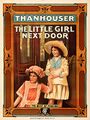 1912 Henderson (film).jpg 500 × 664; 128 KB
 1912 Miller (short).jpg 1,280 × 1,920; 95 KB
 1912 Nichols (short).jpg 500 × 750; 56 KB
- 1912 Shaw (short).jpg 187 × 269; 10 KB
 1913 Bentley (film).jpg 321 × 445; 28 KB
 1914 Hansel (film).jpg 346 × 450; 121 KB
 1914 Perret (film).jpg 344 × 533; 35 KB
 1914 Thornton (film).jpg 394 × 546; 70 KB
 1915.jpg 225 × 225; 3 KB
 1915 Carlucci (serial).jpg 327 × 400; 24 KB
- 1916 King (film).jpg 190 × 281; 11 KB
- 1916 Warrenton (film).jpg 1,000 × 1,500; 298 KB
 1916 Wilson (film).jpg 230 × 345; 27 KB
 1917 Franklin (film).jpg 440 × 576; 112 KB
- 1917 Pastrone (film).jpg 348 × 443; 29 KB
 1917 Vignola & West (lost film).jpg 440 × 653; 99 KB
 1918 Antalffy (film).jpg 1,000 × 1,341; 198 KB
 1918 Campbell (film).jpg 425 × 492; 59 KB
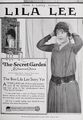 1918 Seyffertitz (lost film).jpg 1,282 × 1,854; 1,015 KB
- 1918 Sidney (film).jpg 220 × 330; 37 KB
 1918 Tourneur (film).jpg 440 × 602; 88 KB
 1919 Lykke-Seest (film).jpg 1,000 × 1,536; 163 KB


