File:1997 Painter.jpg

Original file (900 × 1,353 pixels, file size: 288 KB, MIME type: image/jpeg)
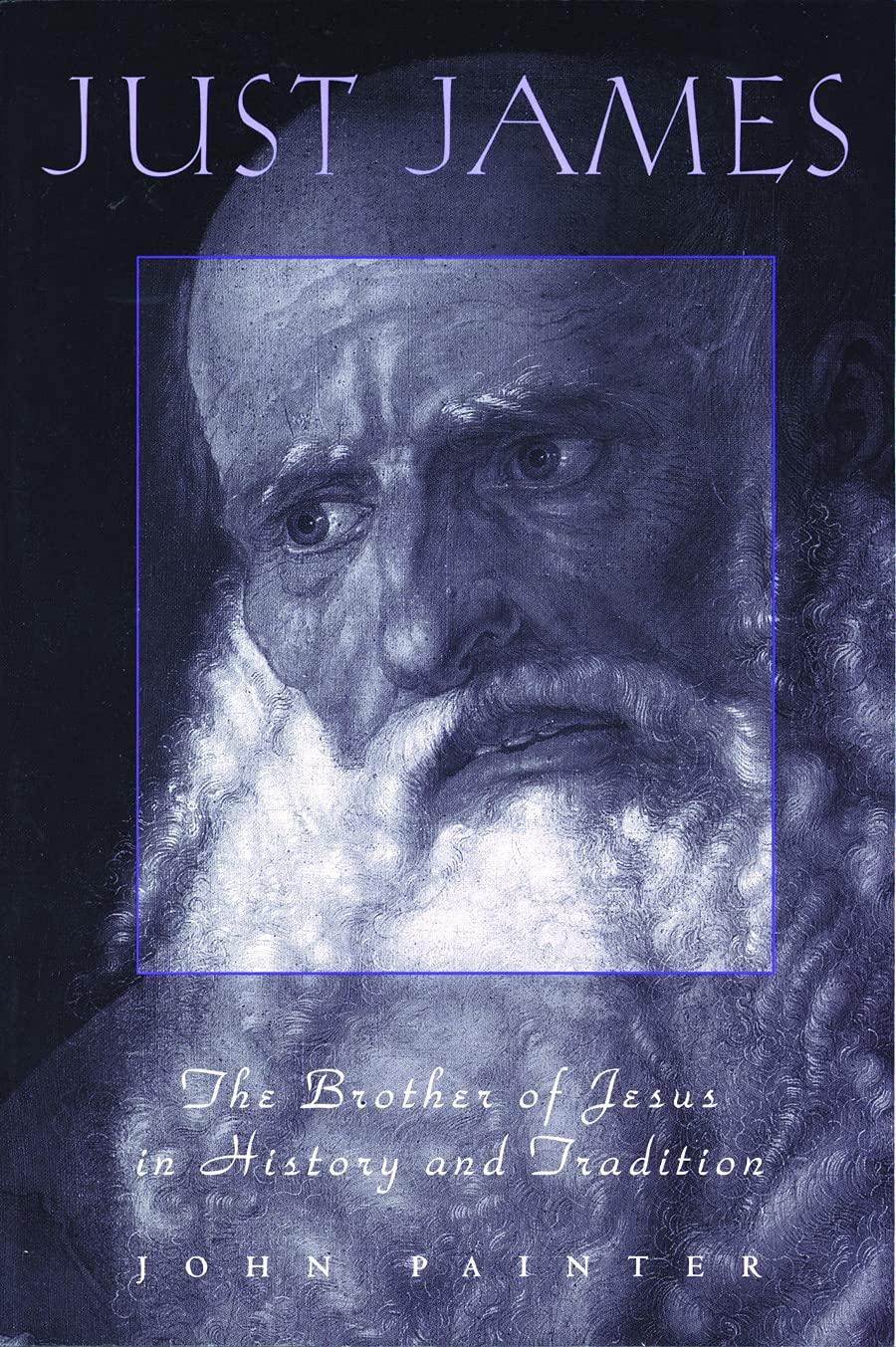
Just James: The Brother of Jesus in History and Tradition (1997) is a book by John Painter.
Abstract
"Just James provides a fascinating treatment of Jesus' brother based on all the ancient sources: New Testament, early church fathers, Nag Hammadi codices, and other early Christian writings. Painter evaluates the importance of this towering figure of the early church whose contributions have been obscured from the consciousness of modern Christianity. The author explores James' relationship to Jesus, Mary's perpetual virginity, James' receipt of special revelations from the risen Lord, and his status as one of the first martyrs of the church."--Publisher description
John Painter’s Just James: The Brother of Jesus in History and Tradition (1997; expanded edition 2004) offers a comprehensive and rigorous historical-critical study of James, the brother of Jesus, situating him as a central figure in the leadership and theological development of early Christianity. Painter’s work systematically interrogates canonical, extra-canonical, and patristic sources to construct an informed and nuanced portrait of James’s identity, role, and legacy.
Painter begins by scrutinizing New Testament evidence—including the Synoptic Gospels, Acts, Paul’s letters, and the Epistle of James—alongside Jewish historian Josephus and early Christian writers such as Eusebius and Jerome. He concludes that James, the brother of the Lord, is a historically distinct figure from James the son of Alphaeus or James the Less, rejecting traditions of ecclesiastical conflation and emphasizing James’s unique leadership role within the Jerusalem community.
The monograph highlights James’s emergence as a pivotal leader following Jesus’s death, demonstrating his authority in the Jerusalem church and his mediation during key controversies, particularly the Gentile mission (Acts 15; Galatians 2). Painter carefully analyzes the theological orientation attributed to James: deep-rootedness in Jewish law and ethical piety, asceticism, and his reputation as “the Just.” The author investigates the nature of James’s interactions with Peter and Paul, framing their relationship not as one of simple antagonism but as a dynamic negotiation between Jewish-Christian tradition and Pauline universalism.
Extensive attention is devoted to the Epistle of James. Painter explores its literary character, authorship, theological content, and reception, persuasively arguing that the letter represents a sophisticated articulation of “active faith” reflective of a church oriented toward Torah observance but adaptable to emerging Christian ethics. The epistle’s perceived tension with Pauline theology is reinterpreted as a complementary tradition rather than a polemical one.
The book traces the post-biblical reception of James through patristic, medieval, and modern traditions, illuminating the complex strategies whereby church authorities and theologians sought either to unify or distinguish the various figures named James for doctrinal reasons. Painter also examines James’s portrayal in apocryphal texts, gnostic literature, and modern scholarship, including archaeological discussions (e.g., the James ossuary debate).
Employing a meticulous historical-critical methodology, Painter situates James as a central “pivot” in early Christianity—between memory and innovation, Jewish heritage and Gentile mission. The study advances the thesis that James’s leadership and theological perspective are vital for understanding both the diversity and the emergence of Christian identity in its earliest phase.
Through contextualized analysis, engagement with scholarly debates, and careful differentiation of historical reality from ecclesiastical tradition, Just James sets a new standard for research on James the brother of Jesus and his enduring significance in Christian history.
Editions and Translations
Published in Columbia, South Carolina: University of South Carolina, 1997. Republished by the same publisher in 2004.
Table of Contents (2004 edition)
- Just James: The Death of a Legend
Part I: The Gospels, Acts, and the Letters of Paul
- 1. The Gospels: James and the Family of Jesus
- The Family in the Gospels
- The Role of the Family
- James: Follower or Opponent
- John: The Family as Followers
- John 2:12: The Faithful Family
- John 7:3-5: The Brothers as Unbelievers?
- John 19:25-27: The Ideal Disciples and the Absence of James
- The Synoptics: The Markan Framework and Its Interpretation by Matthew and Luke
- Mark: A Critique of Disciples and Family
- Mark 3:20-21: Disciples or Family?
- Mark 3:31-35: The Eschatological Family
- Mark 6:3-4: Jesus' Rejection of His Own Country
- Mark 15:40 and Parallels: The Women at the Cross
- Matthew: Nativity and Rejection
- Matt 1:18-25: The Nativity
- Matt 12:46-50: The Eschatological Family
- Math 13-53:58: The Proverb of Rejection
- Luke the Idealization of the Family
- Luke 1:26-56: The Role of Mary in Luke's Nativity Story
- Luke 4:16-30: The Rejection of Nazareth
- Luke 8:19-21: The True Family of Jesus
- The Family in the Gospels
- 2. Acts: James as Convert or Foundation Leader?
- Acts 1:14: The Role of Jesus' Family in the Earliest Church
- Acts 12:17: The Leadership of James
- The Hebrews and the Hellenists
- Acts 15: James and the Council of Jerusalem
- Acts 21:17-26: James as Leader of the Jerusalem Church
- Acts 21:27-36; 23:12-22: James and the Arrest of Paul
- 3. The Letters of Paul: Paul and James
- Galatians: The Two Missions in Antioch and Jerusalem
- Gal 1:17-19: Leadership in Jerusalem
- Gal 2:1-10: The Pillars and the Leadership of the Two Missions
- Gal 2:11-14: James and the Dispute at Antioch
- Two Missions, Many Factions
- 1 Corinthians: Rivalry between James, Peter, and Paul
- 1 Cor 1:5-6: The Role of Wives and Work in the Two Missions
- 1 Cor 15:5-8: Rival Appearance Traditions
- Galatians: The Two Missions in Antioch and Jerusalem
- 4. James, Peter, Matthew, and Paul: Diversity and Conflict in the Two Missions
- Peter and James as Opponents of Paul
- Peter and James and the Leadership Question
- Matthew and the Gentile Mission
- B. H. Streeter and the Conflict between the Two Missions
- Matthew and Antioch
- The Law in Matthew
- Matt 5:17-20
- Matthew and Q: Matt 11:12-13
- Matt 28:19-20
- Models of Leadership and Mission
Part II: Images of James in the Early Church
- 5. Tradition in Eusebius: James the Just, Brother of the Lord, First Bishop and Martyr
- HE 1.12.4-5: Paul and James according to Josephus
- HE 1.13.1-22; 2.1.6-7: The Abgar Incident: An Interlude?
- HE 2.1.2-5: The Use of Unspecified and Specific Sources
- HE 2.1.2: The Summary Statement
- HE 2.1.3-5: Two Quotations from Clement
- HE 2.1.5: Eusebius Appeals to Paul to Clarify the Identity of James
- HE 2.23.1-25: The Martyrdom of James
- HE 2.23.1-3: The Summary by Eusebius
- HE 2.23.3-18: Hegesippus according to Eusebius
- HE 2.23.19: Eusebius' Concluding Summary of Hegesippus
- HE 2.23.20: First "Quotation" of Josephus
- HE 2.23.21-24: Josephus and the Martyrdom of James
- HE 2.23.24-25: Final Summary on James and the Reference to the Epistle
- HE 3.5.2-3: Summary Statements Concerning James as First Bishop and Martyr
- HE 3.7.7-9; 3.11.1; 3.12.1: The Death of Jesus and the Siege of Jerusalem
- HE 3.7.7-9: The Delay of the Siege
- HE 3.11.1; 3.12.1: After the Siege
- HE 3.19.1-3.20.7: The Family of Jesus until the Reign of Trajan
- HE 3.32.1-6: Symeon in the Time of Trajan
- HE 4.5.1-4: The Traditional List of the Bishops of Jerusalem
- HE 4.22.4: The Jerusalem Succession and the Beginning of Heresy
- HE 7.19.1: The Throne of James
- Conclusion: Eusebius on James
- 6. The Nag Hammadi Library: James as Successor to Jesus and Repository to Secret Tradition
- The Coptic Gospel of Thomas: Appointed by the Risen Lord
- The Apocryphon of James: James and the Secret Tradition
- The First Apocalypse of James: The Brother of the Lord and the Chain of Succession
- The Second Apocalypse of James: The Revelation Discourse of Jesus to "the Just One"
- Conclusion
- 7. The Apocrypha and Later Christian Evidence: Bishop of Bishops and Bulwark of Truth
- The Gospel of the Hebrews: The Brother of Jesus as the First Witness
- The Pseudo-Clementines: Bishop of Bishops in the Church of the Hebrews
- The Ascent of James and the MArtyrdom Tradition
- The Kerygmata Petrou and the Epistula Petri on Peter, Paul, and James
- The Pseudo-Clementines and Jewish Christianity
- The Protevangelium of James: James the Son of Joseph
- Origen: The Brother of Jesus and James in Pseudo-Josephus
- Commentary on Matthew X.17
- Contra Celsum 1.47; 2.13
- Conclusions
- The Panarion of Epiphanius: The Royal and Priestly Role of the First Son of Joseph
- Jerome and Helvidius: James as the Cousin of Brother of Jesus
- Conclusion
Part III: James and Jewish Christianity
- 8. Jewish Christianity, the Righteous Sufferer, and the Epistle of James
- Jewish Christianity
- The Epistle of James
- The Teachings of the Epistle of James
- The Epistle of James and the Jesus Tradition
- James and Paul
- Just James
- Excursus: Robert Eisenman's James the Brother of Jesus
Reviews
External Links
File history
Click on a date/time to view the file as it appeared at that time.
| Date/Time | Thumbnail | Dimensions | User | Comment | |
|---|---|---|---|---|---|
| current | 03:21, 4 February 2026 | | 900 × 1,353 (288 KB) | Gabriele Boccaccini (talk | contribs) |
You cannot overwrite this file.
File usage
There are no pages that use this file.
