Category:James--research (subject)
James--reserch (subject)
History of research
From Neander to the Present: A Narrative Journey Through Scholarship on James, Brother of Jesus The figure of James, the brother of Jesus, has long captivated historians and theologians trying to understand the complex origins of Christianity. From the early 19th century to today, scholarly perspectives on James have evolved dramatically, reflecting shifts in methodology, discovery, and theological interpretation.
Early Modern Foundations: Neander and Schaff
The fascinating journey begins with August Neander in 1822, one of the first church historians to seriously address James’s role. Neander saw James as the true leader of the Jerusalem church after Jesus's death, acting as a bridge between Jewish tradition and the emerging Christian faith. He presented James as a conciliator—someone who sought harmony between the Jewish Christian group of Jerusalem and the new, largely Gentile followers brought in by Paul. Philip Schaff, writing in 1842, reinforced this view, solidifying James's status as the cornerstone of the Jerusalem community. Schaff contributed to the understanding that Christianity’s roots lay deeply within Judaism and highlighted the distinction between "Jewish Christianity" (linked to James) and "Gentile Christianity" (associated with Paul). This set the stage for several decades of debate.
The Tubingen School and the Paul-James Divide
Ferdinand Christian Baur’s influential work (1845) marked a major turning point. Baur, a founder of the Tubingen School, dramatically reframed the conversation by emphasizing the tensions between James (and Peter) and Paul. He argued that early Christianity was not a seamless movement, but one fundamentally divided: one side, led by James, kept strict adherence to Jewish law, while the other, championed by Paul, pushed for inclusivity and innovation. Baur’s dichotomy shaped scholarly discourse for generations, casting James as the symbol of tradition and Paul as the voice of change.
Twentieth-Century Developments: Schmithals and Painter
Jumping ahead to the mid-20th century, Walter Schmithals (1963) analyzed the early Christian environment as a landscape of competing movements. For Schmithals, James represented the conservative, apocalyptic faction within early Christianity—those who clung to Jewish traditions in the face of Paul’s universalist message. He underscored how these tensions shaped the trajectory of early Christian communities. Things took a fresh turn in 1997 with John Painter’s seminal book, Just James. Painter provided a rigorous historical reconstruction of James’s life and legacy. He paid close attention to ancient sources like Josephus, Hegesippus, and Eusebius, seeking to distinguish legendary accretions from historical reality. Painter highlighted James’s role as martyr and anchor for the Jerusalem church, painting him as a complex figure—devoted to Jewish law, yet open to new possibilities.
Contemporary Rediscovery: Chilton, Evans, Neusner, Hengel, Hartin, Saxby, and Shillington
From the late 20th century into the 21st, interest in Jewish-Christian origins and Second Temple Judaism led to a renewed appreciation of James. Bruce Chilton and Craig Evans (1999), and later with Jacob Neusner (2001), explored how James was a rigorous observer of Jewish law, leading a Jesus movement that saw itself not as breaking away from Judaism, but as its fulfillment. Martin Hengel (2002) situated James in the context of apocalyptic Jewish sects, emphasizing his role as both mediator and legalist—one who balanced internal community needs with the strict demands of the Mosaic law. Patrick Hartin (2004) shifted focus to the Epistle of James, interpreting it as the spiritual and ethical outgrowth of James’s teachings. Hartin explored how James’s vision combined Jewish wisdom with the values of the emerging Christian community, warning against simplistic readings that ignore historical complexity. Recent years have seen Alan Saxby (2015) argue for the radical centrality of the Jerusalem church under James, situating its messianic and Jewish roots as essential for understanding early Christianity. Vernon Shillington (2015) synthesized newer research, highlighting how James’s memory had been marginalized over time, even though his actual role was crucial to the origins and character of the faith.
Reflections
Across these generations of research, James moves from being a shadowy, almost forgotten figure, to a dynamic, complex leader at the heart of Christian beginnings. Scholars increasingly recognize that, to understand Christianity’s roots, one must grapple with James’s leadership, the Jewishness of the earliest believers, and the tensions—and creative energies—sparked by encounters between tradition and innovation. Today, James stands not just as a guardian of tradition, but as a window onto the vibrant, pluralistic world of Christian origins—a world richer and more diverse than earlier historians ever imagined.
Pages in category "James--research (subject)"
The following 2 pages are in this category, out of 2 total.
Media in category "James--research (subject)"
The following 13 files are in this category, out of 13 total.
 1845 * Baur.jpg 1,000 × 1,576; 589 KB
 1963 Schmithals.jpg 340 × 500; 26 KB
 1965 Schmithals en.jpg 1,011 × 1,500; 75 KB
 1997 Eisenman.jpg 400 × 620; 33 KB
 1997 Painter.jpg 900 × 1,353; 288 KB
 1999-E Chilton Evans.jpg 925 × 1,500; 27 KB
 2001-E Chilton Neusner.jpg 920 × 1,400; 94 KB
 2002 Hengel.jpg 808 × 1,200; 27 KB
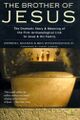 2003-E Shanks Witherington.jpg 668 × 1,000; 59 KB
 2004 Hartin.jpg 1,000 × 1,500; 120 KB
 2006 Tabor.jpg 400 × 615; 48 KB
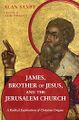 2015 Saxby.jpg 345 × 522; 52 KB
 2015 Shillington.jpg 333 × 500; 39 KB


