Difference between revisions of "File:2024 Pitre.jpg"
(Gabriele Boccaccini uploaded File:2024 Pitre.jpg) |
|||
| Line 1: | Line 1: | ||
Brant James Pitre, '''Jesus and Divine Christology''' (Grand Rapids, MI: Eerdmans, 2024) | Brant James Pitre, '''Jesus and Divine Christology''' (Grand Rapids, MI: Eerdmans, 2024) | ||
== Abstract == | |||
" | "Brant Pitre argues that the historical Jesus saw himself as divine, leading to the emergence of high Christology among his early followers"-- "Did Jesus see himself as divine? Since the beginning of the quest for the historical Jesus, scholars have dismissed the idea that Jesus could have identified himself as God. Such high Christology is frequently depicted as an invention of the councils of Nicaea and Chalcedon, centuries later. Yet recent research has shown that the earliest Jewish followers of Jesus already regarded him as divine. Brant Pitre tackles this paradox in his bold new monograph. Pitre challenges this widespread assumption and makes a robust case that Jesus did consider himself divine. Carefully explicating the Gospels in the context of Second Temple Judaism, Pitre shows how Jesus used riddles, questions, and scriptural allusions to reveal the apocalyptic secret of his divinity. Moreover, Pitre explains how Jesus acts as if he is divine in both the Synoptics and the Gospel of John. Carefully weighing the historical evidence, Pitre argues that the origins of early high Christology can be traced to the historical Jesus's words and actions. 'Jesus and divine Christology' sheds light on long-neglected yet key evidence that the historical Jesus saw himself as divine. Scholars and students of the New Testament--and anyone curious about the Jewish context of early Christianity--will find Pitre's argument a necessary and provocative corrective to a critically underexamined topic."-- | ||
== Contents == | |||
1. The quest and Jesus's divinity. The historical Jesus ; Early high Christology ; Four historical warrants ; Method of proceeding -- 2. The epiphany miracles. The miracles of Jesus ; Stilling the storm ; Walking on the sea ; The transfiguration -- 3. The riddles of Jesus's divinity. The teacher of parables ; Greater than father or mother ; No one is good but God ; The riddle of David's Lord -- 4. The apocalyptic secret. The apocalyptic Jesus ; The heavenly Son of Man ; The question of John the Baptist ; The apocalyptic "thunderbolt" -- 5. Crucified for blasphemy. The criterion of execution ; They picked up stones ; You make yourself God ; The charge of blasphemy -- 6. Implications. Ex nihilo nihil fit ; Early divine Christology ; The parting of the ways ; The long road to Nicaea. | 1. The quest and Jesus's divinity. The historical Jesus ; Early high Christology ; Four historical warrants ; Method of proceeding -- 2. The epiphany miracles. The miracles of Jesus ; Stilling the storm ; Walking on the sea ; The transfiguration -- 3. The riddles of Jesus's divinity. The teacher of parables ; Greater than father or mother ; No one is good but God ; The riddle of David's Lord -- 4. The apocalyptic secret. The apocalyptic Jesus ; The heavenly Son of Man ; The question of John the Baptist ; The apocalyptic "thunderbolt" -- 5. Crucified for blasphemy. The criterion of execution ; They picked up stones ; You make yourself God ; The charge of blasphemy -- 6. Implications. Ex nihilo nihil fit ; Early divine Christology ; The parting of the ways ; The long road to Nicaea. | ||


Revision as of 12:41, 24 July 2025
Brant James Pitre, Jesus and Divine Christology (Grand Rapids, MI: Eerdmans, 2024)
Abstract
"Brant Pitre argues that the historical Jesus saw himself as divine, leading to the emergence of high Christology among his early followers"-- "Did Jesus see himself as divine? Since the beginning of the quest for the historical Jesus, scholars have dismissed the idea that Jesus could have identified himself as God. Such high Christology is frequently depicted as an invention of the councils of Nicaea and Chalcedon, centuries later. Yet recent research has shown that the earliest Jewish followers of Jesus already regarded him as divine. Brant Pitre tackles this paradox in his bold new monograph. Pitre challenges this widespread assumption and makes a robust case that Jesus did consider himself divine. Carefully explicating the Gospels in the context of Second Temple Judaism, Pitre shows how Jesus used riddles, questions, and scriptural allusions to reveal the apocalyptic secret of his divinity. Moreover, Pitre explains how Jesus acts as if he is divine in both the Synoptics and the Gospel of John. Carefully weighing the historical evidence, Pitre argues that the origins of early high Christology can be traced to the historical Jesus's words and actions. 'Jesus and divine Christology' sheds light on long-neglected yet key evidence that the historical Jesus saw himself as divine. Scholars and students of the New Testament--and anyone curious about the Jewish context of early Christianity--will find Pitre's argument a necessary and provocative corrective to a critically underexamined topic."--
Contents
1. The quest and Jesus's divinity. The historical Jesus ; Early high Christology ; Four historical warrants ; Method of proceeding -- 2. The epiphany miracles. The miracles of Jesus ; Stilling the storm ; Walking on the sea ; The transfiguration -- 3. The riddles of Jesus's divinity. The teacher of parables ; Greater than father or mother ; No one is good but God ; The riddle of David's Lord -- 4. The apocalyptic secret. The apocalyptic Jesus ; The heavenly Son of Man ; The question of John the Baptist ; The apocalyptic "thunderbolt" -- 5. Crucified for blasphemy. The criterion of execution ; They picked up stones ; You make yourself God ; The charge of blasphemy -- 6. Implications. Ex nihilo nihil fit ; Early divine Christology ; The parting of the ways ; The long road to Nicaea.
File history
Click on a date/time to view the file as it appeared at that time.
| Date/Time | Thumbnail | Dimensions | User | Comment | |
|---|---|---|---|---|---|
| current | 12:40, 24 July 2025 | 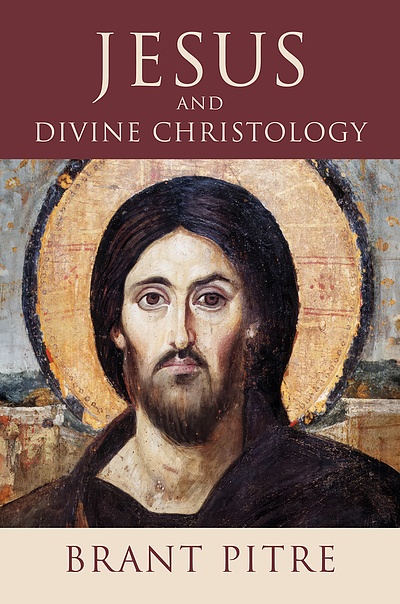 | 400 × 604 (324 KB) | Gabriele Boccaccini (talk | contribs) |
You cannot overwrite this file.
File usage
There are no pages that use this file.
