Difference between revisions of "File:2024 Pitre.jpg"
(Created page with "Brant James Pitre, '''Jesus and Divine Christology''' (Grand Rapids, MI: Eerdmans, 2024) ==== Abstract ==== "An examination and rebuttal of the critical consensus that Jesus...") |
(Gabriele Boccaccini uploaded File:2024 Pitre.jpg) |
(No difference)
| |


Revision as of 12:40, 24 July 2025
Brant James Pitre, Jesus and Divine Christology (Grand Rapids, MI: Eerdmans, 2024)
Abstract
"An examination and rebuttal of the critical consensus that Jesus of Nazareth did not predict or anticipate his post-death return"-- "In this pioneering study of Scripture and reception history, Tucker S. Ferda shows that the hope for Jesus's second coming originated in his own message about the coming of the kingdom after a time of distress. Most historical Jesus scholars take for granted that Jesus's second coming was invented by his zealous early followers. In Jesus and His Promised Second Coming, Tucker S. Ferda challenges this critical consensus. Using innovative methodology, Ferda works backward through reception history to Paul and the Gospels to argue that the hope for the second coming originated in Jesus's own grappling with the prospect of death and his conviction that the kingdom was near; he expected a return that would coincide with the final judgment and the end of the age within the space of a generation. Ferda also makes a major contribution to the reception history of the Bible, shedding light on how Christians distinguished themselves from Judaism by deriding "Jewish messianism" as earthly minded and militaristic. In the early modern period, critics found an expedient way to distance Jesus from this caricature of "Jewish messianism": they pinned the expectation for the second coming on Jesus's early followers. A new appreciation for the diversity of Judaism and messianism in the Second Temple period makes possible a fresh reconstruction of Jesus. Bold and historically astute, Jesus and His Promised Second Coming breathes new life into a long-stagnant conversation. It also offers readers fresh insight into the history of Jewish-Christian relations. Students and scholars of the New Testament will need to read and engage with Ferda's provocative argument"--
Contents
1. The quest and Jesus's divinity. The historical Jesus ; Early high Christology ; Four historical warrants ; Method of proceeding -- 2. The epiphany miracles. The miracles of Jesus ; Stilling the storm ; Walking on the sea ; The transfiguration -- 3. The riddles of Jesus's divinity. The teacher of parables ; Greater than father or mother ; No one is good but God ; The riddle of David's Lord -- 4. The apocalyptic secret. The apocalyptic Jesus ; The heavenly Son of Man ; The question of John the Baptist ; The apocalyptic "thunderbolt" -- 5. Crucified for blasphemy. The criterion of execution ; They picked up stones ; You make yourself God ; The charge of blasphemy -- 6. Implications. Ex nihilo nihil fit ; Early divine Christology ; The parting of the ways ; The long road to Nicaea.
File history
Click on a date/time to view the file as it appeared at that time.
| Date/Time | Thumbnail | Dimensions | User | Comment | |
|---|---|---|---|---|---|
| current | 12:40, 24 July 2025 | 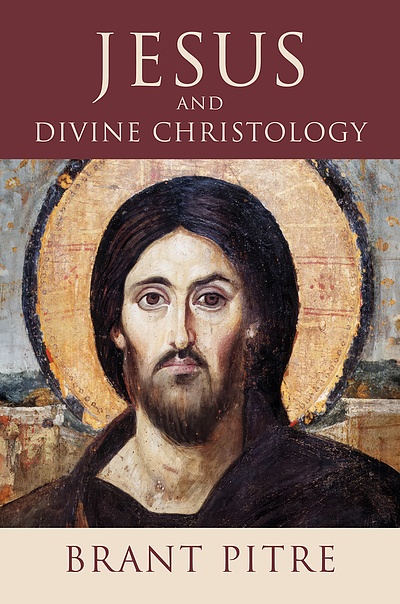 | 400 × 604 (324 KB) | Gabriele Boccaccini (talk | contribs) |
You cannot overwrite this file.
File usage
There are no pages that use this file.
