Difference between revisions of "File:2006 Kelly.jpg"
(Gabriele Boccaccini uploaded File:2006 Kelly.jpg) |
|||
| Line 1: | Line 1: | ||
Henry Ansgar Kelly, '''Satan: A Biography''' ( | Henry Ansgar Kelly, '''Satan: A Biography''' (2006) | ||
==Abstract == | ==Abstract == | ||
"This study shows how the Satan of the New Testament became the modern day personification of evil. ... Christians traditionally think of Satan as Lucifer, God's enemy, who rebelled against Him out of pride and then caused Adam and Eve to sin. But, as Kelly shows, this portrayal is not biblical but a scenario invented by the early Fathers of the Church which became the 'New Biography of Satan'. The 'Original Biography' must be reconstructed from the New Testament where Satan is the same sort of celestial functionary we see in the Book of Job - appointed to govern the world, specifically to monitor and test human beings. But he is brutal and deceitful in his methods, and Jesus predicts that his rule will soon come to an end. Kelly traces the further developments of the 'New Biography': humankind's inherited guilt, captivity by Satan, and punishment in Hell at his hands. This profile of Satan remains dominant, but Kelly urges a return to the 'Original Biography of Satan'."-- | "This study shows how the Satan of the New Testament became the modern day personification of evil. ... Christians traditionally think of Satan as Lucifer, God's enemy, who rebelled against Him out of pride and then caused Adam and Eve to sin. But, as Kelly shows, this portrayal is not biblical but a scenario invented by the early Fathers of the Church which became the 'New Biography of Satan'. The 'Original Biography' must be reconstructed from the New Testament where Satan is the same sort of celestial functionary we see in the Book of Job - appointed to govern the world, specifically to monitor and test human beings. But he is brutal and deceitful in his methods, and Jesus predicts that his rule will soon come to an end. Kelly traces the further developments of the 'New Biography': humankind's inherited guilt, captivity by Satan, and punishment in Hell at his hands. This profile of Satan remains dominant, but Kelly urges a return to the 'Original Biography of Satan'."-- | ||
"Henry Ansgar Kelly’s Satan: A Biography (2006) presents a revisionist account of the Devil’s identity and role within Christian tradition, challenging the widespread assumption that Satan has consistently been understood as God’s cosmic adversary from the biblical period onward. Employing meticulous philological, exegetical, and historical analysis, Kelly argues that in the Hebrew Bible ha‑śāṭān denotes a divinely appointed adversarial functionary rather than a rebellious angel, and that the New Testament likewise portrays Satan within limits imposed by God rather than as an autonomous evil power. Surveying patristic, medieval, and Reformation sources, Kelly contends that much of what modern readers assume about Satan derives from later theological speculation, apocryphal traditions, and popular demonology rather than from the canonical Scriptures themselves. He traces how exegetical shifts, especially in late antiquity and the Middle Ages, gradually recast Satan as the archetypal enemy of God and humanity, culminating in a fully mythologized Devil figure central to Western Christian imagination. By disentangling scriptural evidence from later accretions, Kelly demonstrates that the “biography” of Satan is less a record of a primordial rebel than a history of changing interpretations shaped by evolving doctrinal, cultural, and pastoral concerns. The book thus contributes significantly to biblical studies, historical theology, and demonology, offering a corrective to both popular and scholarly misperceptions of Satan’s biblical and historical profile."--Publisher's description | |||
"Henry Ansgar Kelly’s Satan: A Biography (2006) presents a revisionist account of the Devil’s identity and role within Christian tradition, challenging the widespread assumption that Satan has consistently been understood as God’s cosmic adversary from the biblical period onward. Employing meticulous philological, exegetical, and historical analysis, Kelly argues that in the Hebrew Bible ha‑śāṭān denotes a divinely appointed adversarial functionary rather than a rebellious angel, and that the New Testament likewise portrays Satan within limits imposed by God rather than as an autonomous evil power. Surveying patristic, medieval, and Reformation sources, Kelly contends that much of what modern readers assume about Satan derives from later theological speculation, apocryphal traditions, and popular demonology rather than from the canonical Scriptures themselves. He traces how exegetical shifts, especially in late antiquity and the Middle Ages, gradually recast Satan as the archetypal enemy of God and humanity, culminating in a fully mythologized Devil figure central to Western Christian imagination. By disentangling scriptural evidence from later accretions, Kelly demonstrates that the “biography” of Satan is less a record of a primordial rebel than a history of changing interpretations shaped by evolving doctrinal, cultural, and pastoral concerns. The book thus contributes significantly to biblical studies, historical theology, and demonology, offering a corrective to both popular and scholarly misperceptions of Satan’s biblical and historical profile."--ChatGTP | |||
== Contents == | == Contents == | ||


Latest revision as of 07:43, 29 July 2025
Henry Ansgar Kelly, Satan: A Biography (2006)
Abstract
"This study shows how the Satan of the New Testament became the modern day personification of evil. ... Christians traditionally think of Satan as Lucifer, God's enemy, who rebelled against Him out of pride and then caused Adam and Eve to sin. But, as Kelly shows, this portrayal is not biblical but a scenario invented by the early Fathers of the Church which became the 'New Biography of Satan'. The 'Original Biography' must be reconstructed from the New Testament where Satan is the same sort of celestial functionary we see in the Book of Job - appointed to govern the world, specifically to monitor and test human beings. But he is brutal and deceitful in his methods, and Jesus predicts that his rule will soon come to an end. Kelly traces the further developments of the 'New Biography': humankind's inherited guilt, captivity by Satan, and punishment in Hell at his hands. This profile of Satan remains dominant, but Kelly urges a return to the 'Original Biography of Satan'."--
"Henry Ansgar Kelly’s Satan: A Biography (2006) presents a revisionist account of the Devil’s identity and role within Christian tradition, challenging the widespread assumption that Satan has consistently been understood as God’s cosmic adversary from the biblical period onward. Employing meticulous philological, exegetical, and historical analysis, Kelly argues that in the Hebrew Bible ha‑śāṭān denotes a divinely appointed adversarial functionary rather than a rebellious angel, and that the New Testament likewise portrays Satan within limits imposed by God rather than as an autonomous evil power. Surveying patristic, medieval, and Reformation sources, Kelly contends that much of what modern readers assume about Satan derives from later theological speculation, apocryphal traditions, and popular demonology rather than from the canonical Scriptures themselves. He traces how exegetical shifts, especially in late antiquity and the Middle Ages, gradually recast Satan as the archetypal enemy of God and humanity, culminating in a fully mythologized Devil figure central to Western Christian imagination. By disentangling scriptural evidence from later accretions, Kelly demonstrates that the “biography” of Satan is less a record of a primordial rebel than a history of changing interpretations shaped by evolving doctrinal, cultural, and pastoral concerns. The book thus contributes significantly to biblical studies, historical theology, and demonology, offering a corrective to both popular and scholarly misperceptions of Satan’s biblical and historical profile."--Publisher's description
"Henry Ansgar Kelly’s Satan: A Biography (2006) presents a revisionist account of the Devil’s identity and role within Christian tradition, challenging the widespread assumption that Satan has consistently been understood as God’s cosmic adversary from the biblical period onward. Employing meticulous philological, exegetical, and historical analysis, Kelly argues that in the Hebrew Bible ha‑śāṭān denotes a divinely appointed adversarial functionary rather than a rebellious angel, and that the New Testament likewise portrays Satan within limits imposed by God rather than as an autonomous evil power. Surveying patristic, medieval, and Reformation sources, Kelly contends that much of what modern readers assume about Satan derives from later theological speculation, apocryphal traditions, and popular demonology rather than from the canonical Scriptures themselves. He traces how exegetical shifts, especially in late antiquity and the Middle Ages, gradually recast Satan as the archetypal enemy of God and humanity, culminating in a fully mythologized Devil figure central to Western Christian imagination. By disentangling scriptural evidence from later accretions, Kelly demonstrates that the “biography” of Satan is less a record of a primordial rebel than a history of changing interpretations shaped by evolving doctrinal, cultural, and pastoral concerns. The book thus contributes significantly to biblical studies, historical theology, and demonology, offering a corrective to both popular and scholarly misperceptions of Satan’s biblical and historical profile."--ChatGTP
Contents
About the Author
Henry Ansgar Kelly is Distinguished Professor Emeritus, Department of English and Director of the Center of Medieval Studies, University of California, Los Angeles.
File history
Click on a date/time to view the file as it appeared at that time.
| Date/Time | Thumbnail | Dimensions | User | Comment | |
|---|---|---|---|---|---|
| current | 13:56, 28 July 2025 | 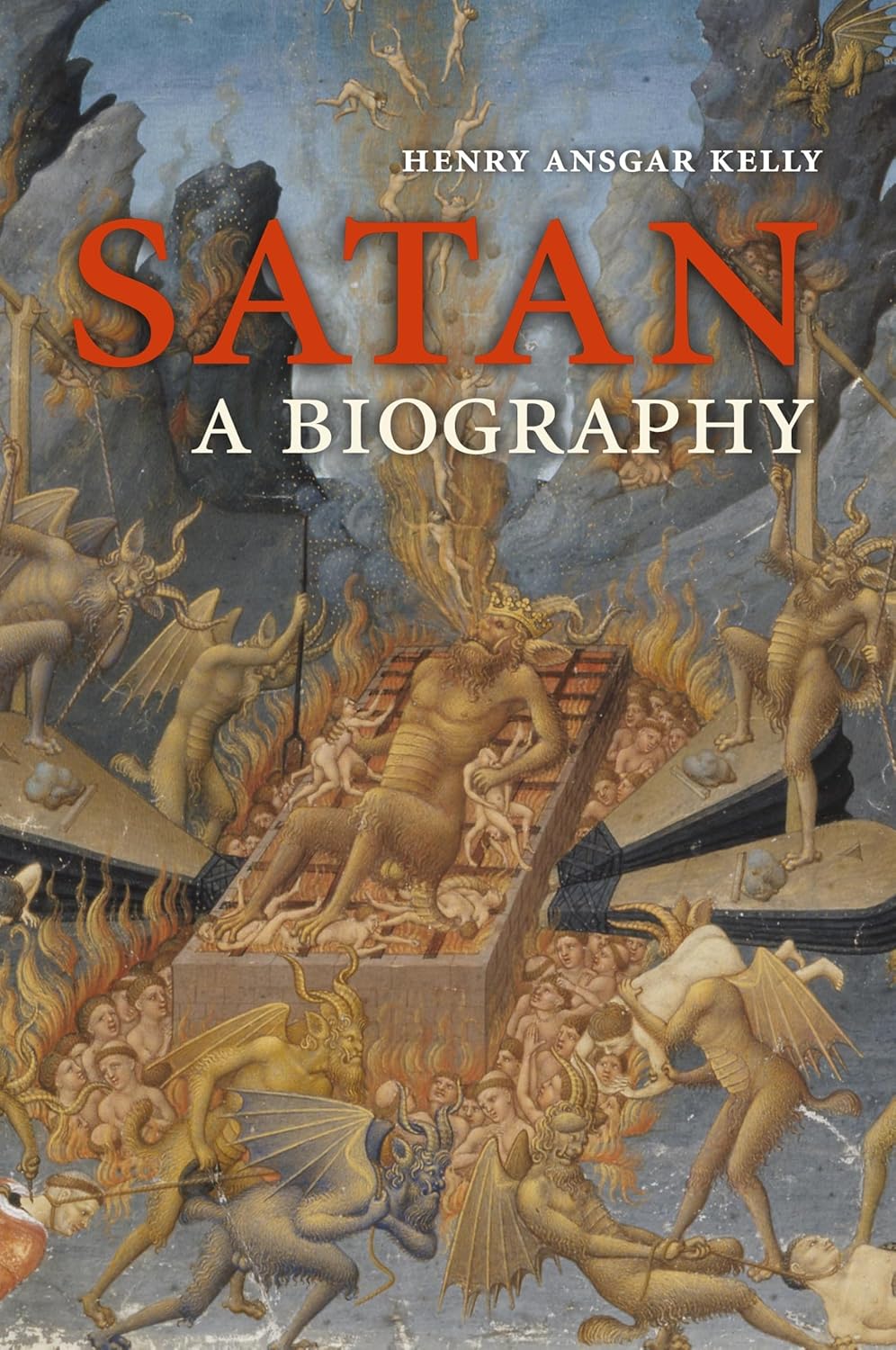 | 996 × 1,500 (205 KB) | Gabriele Boccaccini (talk | contribs) |
You cannot overwrite this file.
File usage
There are no pages that use this file.
