Difference between revisions of "File:2002 Mitchell.jpg"
(Gabriele Boccaccini uploaded File:2025 Mitchell.jpg) |
|||
| Line 1: | Line 1: | ||
Charles P. Mitchell, '''The Devil on Screen: Feature Films Worldwide, 1913 through 2000''' (Jefferson, NC: McFarland & Co., 2002). | Charles P. Mitchell, '''The Devil on Screen: Feature Films Worldwide, 1913 through 2000''' (Jefferson, NC: McFarland & Co., 2002). | ||
"The Devil has been represented in many film genres, including horror, comedy, the musical, fantasy, satire, drama, and the religious epic, and in these works has assumed many shapes and forms. This work explores in detail feature films from the year 1913 through the year 2000 that depict the Devil. It begins with an overview that discusses how the devil has been portrayed on stage, how that portrayal carried over to the big screen, and what are the standard elements of a satanic plot. Each entry in the filmography includes such particulars as the year of production, running time, and the names of the writer, editor, cinematographer, producer, and director. An evaluative rating, annotated cast list, plot synopsis, and film appraisal are also provided for each film, as well as a spotlight on the performance of the actor playing the role of Satan." | "The Devil has been represented in many film genres, including horror, comedy, the musical, fantasy, satire, drama, and the religious epic, and in these works has assumed many shapes and forms. This work explores in detail feature films from the year 1913 through the year 2000 that depict the Devil. It begins with an overview that discusses how the devil has been portrayed on stage, how that portrayal carried over to the big screen, and what are the standard elements of a satanic plot. Each entry in the filmography includes such particulars as the year of production, running time, and the names of the writer, editor, cinematographer, producer, and director. An evaluative rating, annotated cast list, plot synopsis, and film appraisal are also provided for each film, as well as a spotlight on the performance of the actor playing the role of Satan."--Publisher | ||
"Charles P. Mitchell’s The Devil on Screen: Feature Films Worldwide, 1913 through 2000 (2002) provides the first comprehensive survey of cinematic portrayals of the Devil across nearly a century of global film production. Organized as an annotated filmography with critical commentary, the volume documents more than 150 feature films from diverse cultural contexts, tracing how the Devil has been imagined, personified, and reinterpreted within the visual medium of cinema. Mitchell situates each film in its cultural and historical context, exploring thematic patterns such as the Devil as tempter, trickster, corrupter, rebel, and comic figure. The study highlights the intersection of theological concepts with popular culture, showing how cinematic depictions both reflect and shape public perceptions of evil, morality, and the supernatural. Particular attention is given to recurring motifs such as Faustian bargains, apocalyptic battles, demonic possession, and satirical representations of hell. The book also addresses the influence of religious traditions, folklore, and literary sources (e.g., Goethe’s Faust, Milton’s Paradise Lost, biblical narratives) on modern filmic constructions of Satan. While descriptive in format, Mitchell’s commentary underscores broader questions about the persistence and adaptability of the Devil as a cultural archetype in the 20th century. As a resource, the volume serves scholars of religion, film studies, and cultural history, providing both a catalog of cinematic representations and a framework for understanding how the Devil continues to function as a powerful symbol in modern visual storytelling."--ChatGTP | |||
==== Contents ==== | ==== Contents ==== | ||


Revision as of 08:29, 29 July 2025
Charles P. Mitchell, The Devil on Screen: Feature Films Worldwide, 1913 through 2000 (Jefferson, NC: McFarland & Co., 2002).
"The Devil has been represented in many film genres, including horror, comedy, the musical, fantasy, satire, drama, and the religious epic, and in these works has assumed many shapes and forms. This work explores in detail feature films from the year 1913 through the year 2000 that depict the Devil. It begins with an overview that discusses how the devil has been portrayed on stage, how that portrayal carried over to the big screen, and what are the standard elements of a satanic plot. Each entry in the filmography includes such particulars as the year of production, running time, and the names of the writer, editor, cinematographer, producer, and director. An evaluative rating, annotated cast list, plot synopsis, and film appraisal are also provided for each film, as well as a spotlight on the performance of the actor playing the role of Satan."--Publisher
"Charles P. Mitchell’s The Devil on Screen: Feature Films Worldwide, 1913 through 2000 (2002) provides the first comprehensive survey of cinematic portrayals of the Devil across nearly a century of global film production. Organized as an annotated filmography with critical commentary, the volume documents more than 150 feature films from diverse cultural contexts, tracing how the Devil has been imagined, personified, and reinterpreted within the visual medium of cinema. Mitchell situates each film in its cultural and historical context, exploring thematic patterns such as the Devil as tempter, trickster, corrupter, rebel, and comic figure. The study highlights the intersection of theological concepts with popular culture, showing how cinematic depictions both reflect and shape public perceptions of evil, morality, and the supernatural. Particular attention is given to recurring motifs such as Faustian bargains, apocalyptic battles, demonic possession, and satirical representations of hell. The book also addresses the influence of religious traditions, folklore, and literary sources (e.g., Goethe’s Faust, Milton’s Paradise Lost, biblical narratives) on modern filmic constructions of Satan. While descriptive in format, Mitchell’s commentary underscores broader questions about the persistence and adaptability of the Devil as a cultural archetype in the 20th century. As a resource, the volume serves scholars of religion, film studies, and cultural history, providing both a catalog of cinematic representations and a framework for understanding how the Devil continues to function as a powerful symbol in modern visual storytelling."--ChatGTP
Contents
The Films 7 -- Appendix 1 Lost, Obscure, and Arcane Devil Films 305 -- Appendix 2 Television Devils 309.
File history
Click on a date/time to view the file as it appeared at that time.
| Date/Time | Thumbnail | Dimensions | User | Comment | |
|---|---|---|---|---|---|
| current | 12:20, 18 July 2025 | 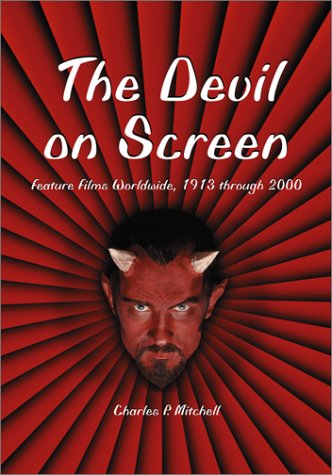 | 332 × 475 (40 KB) | Gabriele Boccaccini (talk | contribs) |
You cannot overwrite this file.
File usage
There are no pages that use this file.
