File:Native American History.png
Jump to navigation
Jump to search
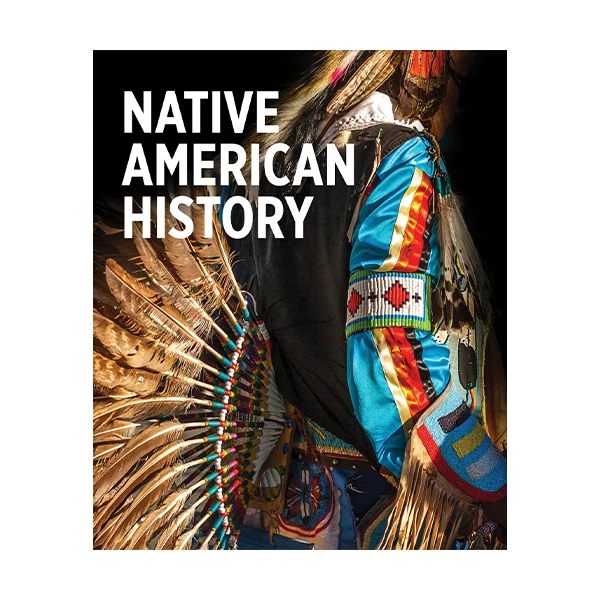
No higher resolution available.
Native_American_History.png (600 × 600 pixels, file size: 410 KB, MIME type: image/png)
Native American History
The Era of Assimilation & Citizenship (1900–1933)
- June 3, 1910 – Premiere of Poia -- Composed by Arthur Nevin, this grand opera was based on the sacred Blackfoot legend of Poia (Scarface). After researching extensively on the Blackfeet Reservation, Nevin attempted to weave tribal musical structures into a European framework. It made history as the first American opera premiered by the prestigious Berlin Royal Opera
- October 16, 1911 – Founding of the Society of American Indians -- Formed by Native intellectuals, this was the first national American Indian rights organization managed entirely by Native Americans. It marked the transition into modern political activism, fighting for better education, legal rights, and a unified national voice.
- January 3, 1913 – Premiere of Natoma at the Metropolitan Opera -- Composed by Victor Herbert, this was one of the earliest mainstream American operas to feature a Native American protagonist. While heavily romanticized by modern standards, it was a monumental cultural event that brought Indigenous themes, music styles, and complex staging into the elite world of classical grand opera.
- February 20, 1913 – Premiere of The Sun Dance Opera -- This is an monumental milestone as the first opera co-created by a Native American composer. Yankton Dakota activist, writer, and musician Zitkála-Šá collaborated with non-Native composer William F. Hanson. It heavily featured Ute and Shoshone rituals, bringing the sacred Sun Dance—which was actively criminalized by the U.S. government at the time—straight to the operatic stage.
- December 7, 1914 -- In the Land of the Head Hunters (Curtis), film -- Made with the Kwakwaka'wakw people, it serves as an invaluable, rare visual record of authentic traditional costumes, longhouses, and canoes
- March 23, 1918 – Premiere of Shanewis (The Robin Woman) -- Composed by Charles Wakefield Cadman with a libretto partly inspired by the life of Creek mezzo-soprano Tsianina Redfeather Blackstone. Premiering at the Metropolitan Opera, it featured a contemporary Native protagonist (Shanewis) navigating modern American society, directly challenging the stereotype that Native people belonged only in the historical past.
- October 17, 1920 -- The Daughter of Dawn, film (Premiered at the College Theater in Los Angeles; it never received a wide commercial distribution during its time) -- This film features an all-Native American cast of 300 Comanche and Kiowa people. It is highly significant because it focuses entirely on their daily lives, romance, and traditions without centering the plot around conflict with white settlers
- 1921 – Release of the song "From the Land of the Sky-Blue Water":** -- Composed by Charles Wakefield Cadman, this piece became a global phenomenon and defined the "Indianist movement" in American music. It integrated authentic Omaha tribal melodies into western classical structures, forcing the mainstream music world to recognize the complexity and beauty of Indigenous musical scales.
- June 11, 1922 – Nanook of the North (Flaherty), film -- Directed by Robert J. Flaherty, this landmark project functions as a docufiction hybrid. It places an Inuit hunter (Allakariallak) and his family as the absolute protagonists. The entire narrative focuses on human endurance and the family's ingenuity in surviving the Canadian Arctic, completely devoid of Hollywood action clichés.
- June 2, 1924 – The Indian Citizenship Act (Snyder Act) -- Signed by President Calvin Coolidge, this historic federal legislation granted full U.S. citizenship to all Native Americans born within the territorial limits of the United States. It eliminated legal ambiguity, though many states still unconstitutionally barred Native people from voting for decades to come.
- October 15, 1925 -- The Vanishing American, film (Limited premiere; the wide theatrical release followed on February 15, 1926) -- It stands out as an early and powerful social critique of government corruption. The film openly exposed the exploitation and poor living conditions that Navajo people faced on reservations after serving their country in WWI.
- November 11, 1926 – Premiere of Winona: Composed by the Italian-born Alberto Bimboni with a libretto by Perry S. Williams. Based on a famous Dakota Sioux legend centered around Lake Pepin, the opera cast its Native protagonist as a romantic heroine fighting tribal laws and an arranged marriage. Bimboni integrated authentic Chippewa and Sioux melodies into the score.
- May 9, 1930 -- The Silent Enemy, film (Official premiere in New York City; the wide Paramount national release followed on August 2, 1930) -- Shot with an all-Indigenous cast (primarily Ojibway), this film is praised for its deep anthropological respect [silentfilm.org]. It was created specifically to document Native life before Columbus, completely avoiding Hollywood's typical action tropes
The Reversal and World War II (1934–1945)
- June 18, 1934 – The Indian Reorganization Act (The Indian New Deal) -- This act formally ended the devastating "Allotment Era" (which had carved up tribal lands). It helped reverse forced cultural assimilation, protected remaining tribal territories, and provided a legal framework for tribes to re-establish self-governing tribal councils and business corporations.
- May 1942 – The Mobilization of the Navajo Code Talkers -- The U.S. Marines recruited bilingual Navajo citizens to develop an unbreakable military code based on their complex native language. Serving in the Pacific Theater, hundreds of code talkers from the Navajo Nation and other tribes provided a vital strategic edge that saved thousands of lives and proved essential to the Allied victory.
The Termination Era & Urban Relocation (1946–1960s)
- April 16, 1946 – Broadway Premiere of Annie Get Your Gun -- This hit musical introduced the legendary character of Chief Sitting Bull to theater audiences. Crucially, the show portrayed Sitting Bull not as a caricature, but as a wise, highly respected, and deeply witty leader who adopts Annie Oakley, presenting a surprisingly positive and dignified Native character to mainstream post-war Broadway.
- July 21, 1950 – Broken Arrow, film -- This film represents Hollywood's first major, big-budget sound attempt to humanize historical leaders. It stars Jeff Chandler as the Apache leader Cochise, positioning him as a highly sophisticated, honorable co-protagonist. The narrative treats his perspective and desire for peace with complete equality alongside James Stewart's character.
- August 1, 1953 – House Concurrent Resolution 108 (The Termination Policy) -- The U.S. government initiated a disastrous policy aiming to completely dissolve the sovereign status of tribes and extinguish the special federal trust relationship. Over the next two decades, more than 100 tribes were stripped of federal recognition, resulting in immediate economic devastation and a massive loss of protected tribal lands.
- July 9, 1954 – Apache (Aldrich), film -- Directed by Robert Aldrich, the film features Burt Lancaster as Massai, a real-life Apache warrior who refuses to surrender after Geronimo's capitulation. Despite Lancaster appearing in brownface, Massai is the sole protagonist of the entire picture, framing his one-man rebellion and struggle to safely farm his own land as a heroic quest for freedom.
- August 1, 1956 – The Indian Relocation Act -- Following up on Termination, this law funded and pressured over 100,000 Native Americans to leave their ancestral reservations and move to major urban centers like Chicago, Denver, and San Francisco. While intended to accelerate assimilation, it accidentally fostered a concentrated, pan-Indian urban community that birthed the modern civil rights movement.
The Red Power Movement & Self-Determination (1968–1980s)
- April 11, 1968 – The Indian Civil Rights Act (ICRA) -- This law extended most of the constitutional protections of the American Bill of Rights to tribal members under the jurisdiction of tribal governments, while simultaneously protecting tribal courts and sovereignty from outside state overreach.
- November 20, 1969 – The Occupation of Alcatraz Island -- Activists calling themselves "Indians of All Tribes" seized and occupied the abandoned Alcatraz prison island for 19 months. Citing an old treaty right, this high-profile protest ignited the global "Red Power" movement, bringing international attention to systemic federal injustices.
- February 23, 1970 – Little Big Man, film -- This revisionist western film completely flipped the traditional Hollywood narrative. It portrayed the Cheyenne people as deeply humane, civilized, and spiritually advanced, while depicting the U.S. Cavalry as brutal invaders, drastically shifting public empathy and awareness during the Vietnam War era.
• January 1, 1971 – Release of the hit rock song "Half-Breed":** -- Recorded by Cher (who claimed Cherokee ancestry), this chart-topping pop song openly addressed the painful social realities, racism, and identity crises faced by individuals of mixed Native American and white heritage, sparking widespread public discussion about modern discrimination.
- February 27, 1973 – The Wounded Knee Incident -- Armed activists from the American Indian Movement (AIM) occupied the town of Wounded Knee, South Dakota (site of the infamous 1890 massacre). The 71-day armed standoff with federal marshals protested corrupt tribal leadership and broken federal treaties, cementing Native rights at the forefront of national media.
- January 4, 1975 – Indian Self-Determination and Education Assistance Act -- This momentous shift officially buried the "Termination" policy. It gave tribes the legal power to directly manage federal funds, run their own schools, control law enforcement, and administer community programs, effectively restoring true tribal sovereignty.
The Modern Era: Economic Empowerment & Representation (1988–Present)
- October 17, 1988 – Indian Gaming Regulatory Act (IGRA) -- This federal law established the legal structure for native-owned casino gaming on tribal lands. It recognized gaming as a legitimate mechanism for generating tribal revenue, promoting economic development, and funding independent tribal infrastructure, schools, and health facilities.
- November 9, 1990 – Dances with Wolves, film -- This cinematic masterpiece became a global juggernaut, winning 7 Academy Awards. It completely re-educated the public by insisting on deep cultural accuracy, portraying the Lakota Sioux with profound emotional depth, and utilizing extensive Native dialogue with English subtitles.
- October 1994 – Premiere of Moontide: The Man Who Hated Money: Composed by Dr. Louis W. Ballard (Quapaw/Cherokee), who is widely regarded as the father of modern Native American classical music. Premiering in Germany, this opera was groundbreaking because it approached Native themes entirely through an authentic, un-assimilated Indigenous musical and philosophical lens.
- June 23, 1995 – Release of Disney's Pocahontas: Despite taking massive liberties with historical facts, this animated blockbuster was culturally groundbreaking. It gave millions of children worldwide their first Indigenous Disney protagonist, heavily criticized environmental destruction, and hired Native activists (like Russell Means) to voice and consult on the characters.
- 2005 – World Premiere of the Native Opera Klee Wyh -- Commissioned to honor Northwest Coast Indigenous traditions, this contemporary operatic work integrated authentic First Nations storytelling and vocal traditions directly into the opera house, proving that traditional Native narratives could command elite modern stages.
- April 2016 – March 2017 – The Standing Rock Dakota Access Pipeline Protests -- The largest gathering of Native tribes in over a century took place at the Standing Rock Reservation to protest an oil pipeline crossing sacred lands and water sources. It catalyzed a massive, modern Indigenous-led environmental movement centered on tribal consultation rights.
- February 13, 2020 – Premiere of Sweet Land -- Co-composed by Navajo Pulitzer Prize-winner Raven Chacon and Du Yun, this highly acclaimed, immersive outdoor opera premiered in Los Angeles. It serves as a haunting erasure of typical historical myths, tracking how white arrival systematically disrupted and rewrote the histories of Indigenous communities.
- March 15, 2021 – Deb Haaland Appointed as Secretary of the Interior -- Laguna Pueblo member Deb Haaland was sworn in as the head of the Department of the Interior. This marked the first time a Native American served as a presidential cabinet secretary, putting an Indigenous person in direct control of the very federal agency that historically managed—and often suppressed—tribal affairs.
- August 9, 2021 – Premiere of Reservation Dogs on FX/Hulu -- Created by Sterlin Harjo and Taika Waititi, this critically acclaimed series made history with an entirely Indigenous team of writers, directors, and series regulars. It completely revolutionized television by showing the hilarious, heartbreaking, and deeply authentic reality of modern Native youth, destroying decades of historical Hollywood stereotypes.
- August 5, 2022 – Release of Prey on Hulu/Disney+: This installment of the Predator franchise set a new industry benchmark for representation. Set in the 1719 Comanche Nation, the action-thriller featured a primarily Native cast, focused entirely on Comanche survival tactics, and became the first-ever movie to offer a full, professional dubbing in the Comanche language.
- May 2023 – Premiere of Nu Nah-Hup: Sacajawea's Story: Produced by Opera Theater Oregon, this piece centers entirely on the historical Shoshone guide. The libretto was written by Rose Ann Abrahamson, a direct great-great-grandniece of Sacajawea. Crucially, it completely avoids traditional Western tropes by being sung partly in the original Agai-Dika/Lemhi-Shoshone language.
- September 2026 – Premiere of Ḵutulagaaw: The Tlingit-Russian Battles: Premiering in Juneau, Alaska, this monumental contemporary production was built over nine years by a team of mostly Alaska Native talent. The opera retells the historic early 1800s battles strictly from a Tlingit perspective, reclaiming an operatic space to honor ancestral resistance against colonial powers.
File history
Click on a date/time to view the file as it appeared at that time.
| Date/Time | Thumbnail | Dimensions | User | Comment | |
|---|---|---|---|---|---|
| current | 21:33, 22 September 2026 | | 600 × 600 (410 KB) | Gabriele Boccaccini (talk | contribs) |
You cannot overwrite this file.
File usage
The following 6 pages use this file:
- Gabriele Boccaccini (1914): A Biography in Pictures
- Gabriele Boccaccini (1920): A Biography in Pictures
- Gabriele Boccaccini (1922): A Biography in Pictures
- Gabriele Boccaccini (1925): A Biography in Pictures
- Gabriele Boccaccini (1930): A Biography in Pictures
- Gabriele Boccaccini (1950): A Biography in Pictures
