File:1724 Handel (opera).png
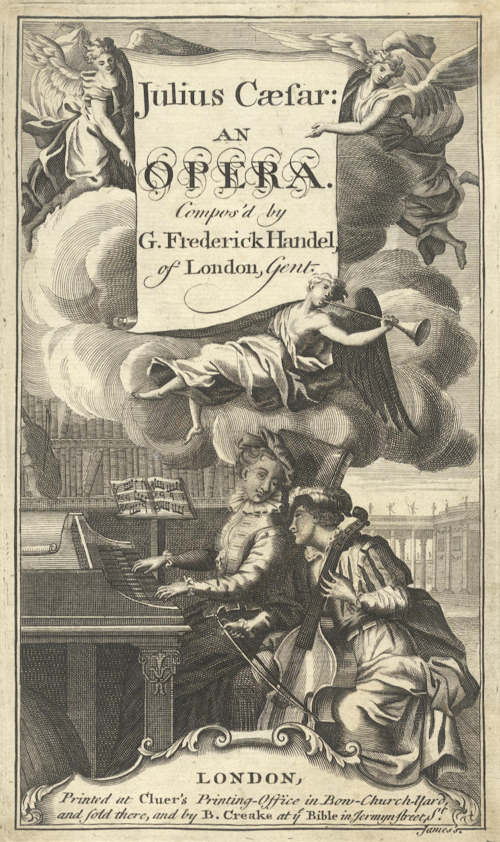
Original file (500 × 842 pixels, file size: 934 KB, MIME type: image/png)
Giulio Cesare
- 1. The World Premiere in London (1724)
The opera debuted on February 20, 1724, at the King's Theatre in Haymarket, London. It was an immediate triumph, featuring a stellar cast led by the legendary castrato Senesino in the title role and soprano Francesca Cuzzoni as Cleopatra. Handel himself directed from the harpsichord, showcasing one of his richest and most lavish orchestral scores, which included unusual horn solos and a highly complex, theatrical seduction scene in the second act.
- 2. The First Modern Revival in Göttingen (1922)
After nearly two centuries of obscurity, the opera returned to the stage on July 5, 1922, in Göttingen, Germany, thanks to the pioneer of the Handel Renaissance, Oskar Hagen. As was typical for the era, the score was heavily modified, cut, and re-orchestrated to suit early 20th-century tastes. The main role, originally written for a high voice, was transposed for baritone Wilhelm Guttmann, establishing a "heroic baritone" performance practice that would last for decades.
- 3. The Landmark New York City Opera Production (1966)
This staging marked a major turning point for the global popularity of the work in the modern era. Conducted by Julius Rudel, the production definitively catapulted soprano Beverly Sills to international stardom for her dazzling portrayal of Cleopatra. The role of Caesar was sung by the celebrated bass-baritone Norman Treigle. While not yet historically informed, it restored Handel's demanding vocal virtuosity and electrified American critics.
- 4. The Historically Informed Breakthrough by René Jacobs (1991)
The studio recording and subsequent concert tours conducted by countertenor and conductor René Jacobs with Concerto Köln in 1991 set a completely new standard for Handel performance practice. For the first time, the score was performed entirely uncut on period instruments, restoring the original keys and casting mezzo-soprano Jennifer Larmore as Caesar. This proved to modern audiences the theatrical power and validity of the vocal timbres Handel originally intended.
5. The Iconic Glyndebourne Production (2005)
The staging directed by David McVicar for the Glyndebourne Festival is widely considered one of the most celebrated opera productions of the 21st century. McVicar chose to set the action in early 20th-century colonial Egypt, famously integrating vibrant, Bollywood-inspired choreography. Conducted by William Christie with the Orchestra of the Age of Enlightenment, it featured a triumphant Sarah Connolly as Caesar and a captivating, star-making performance by Danielle de Niese as Cleopatra.
File history
Click on a date/time to view the file as it appeared at that time.
| Date/Time | Thumbnail | Dimensions | User | Comment | |
|---|---|---|---|---|---|
| current | 09:19, 1 September 2026 | | 500 × 842 (934 KB) | Gabriele Boccaccini (talk | contribs) |
You cannot overwrite this file.
File usage
The following page uses this file:
