Category:Paul & Apocalypticism (subject)
Paul & Apocalypticism
2020
- Book -- Gabriele Boccaccini -- Paul's Three Paths to Salvation (Grand Rapids, MI: Eerdmans, 2020) -- <English>
2018
- Article -- Lisa M. Bowens -- "Divine Desire: Paul's Apocalyptic God of Rescue" -- Theology Today 75.1 (2018) 9-21 -- <English>
2017
- Book -- Lisa M. Bowens -- An Apostle in Battle: Paul and Spiritual Warfare in 2 Corinthians 12:1-10 (2017 Bowens), book (Wissenschaftliche Untersuchungen Zum Neuen Testament 2.Reihe; Tubingen: Mohr Siebeck, 2017)
- Article -- James M. Scott (b.1955) -- A comparison of Paul's Letter to the Galatians with the Epistle of Enoch -- In The Jewish Apocalyptic Tradition and the Shaping of New Testament Thought, ed. Benjamin E. Reynolds and Loren T. Stuckenbruck (Minneapolis: Fortress Press, 2017) 193-218
2016
- Book -- James P. Davies, Trinity College, Bristol, UK; jamie.davies@trinitycollegebristol.ac.uk) -- Paul among the Apocalypses?: An Evaluation of the Apocalyptic Paul in the Context of Jewish and Christian Apocalyptic Literature (2016 Davies), book
- Edited volume -- Paul and the Apocalyptic Imagination (2016 Blackwell, Goodrich, Maston), edited volume (Minneapolis: Fortress. 2016) -- <English>
- Article -- James H. Charlesworth -- Paul, the Jewish apocalypses, and apocalyptic eschatology -- In Paul the Jew: Rereading the Apostle as a Figure of Second Temple Judaism, ed. Gabriele Boccaccini and Carlos A. Segovia (Minneapolis: Fortress Press, 2016) 83-105.
- Article -- James P. Davies -- Evil's aetiology and false dichotomies in Jewish apocalyptic and Paul -- In Evil in Second Temple Judaism and Early Christianity, ed. Chris Keith and Loren T. Stuckenbruck (Tübingen: Mohr Siebeck, 2016) 169-189.
- Article -- Matthew J. Goff -- Heavenly mysteries and otherworldly journeys : interpreting 1 and 2 Corinthians in relation to Jewish apocalypticism -- In Paul the Jew: Rereading the Apostle as a Figure of Second Temple Judaism, ed. Gabriele Boccaccini and Carlos A. Segovia (Minneapolis: Fortress Press, 2016) 133-148.
- Article -- Loren T. Stuckenbruck -- How much evil does the Christ event solve? : Jesus and Paul in relation to Jewish “apocalyptic” thought -- In Evil in Second Temple Judaism and Early Christianity, ed. Chris Keith and Loren T. Stuckenbruck (Tübingen: Mohr Siebeck, 2016) 142-168.
2014
- Article -- Loren T. Stuckenbruck -- Overlapping Ages at Qumran and ‘Apocalyptic' in Pauline Theology -- The Dead Sea Scrolls and Pauline Literature, ed. Jean-Sébastien Rey (Leiden: Brill, 2014), 309-326 -- <English>
2013
- Edited volume -- Beverly R. Gaventa -- Apocalyptic Paul: Cosmos and Anthropos in Romans 5-8 (2013 Gaventa), edited volume --
- Article -- Mark P. Surburg -- Rectify or justify?: A response to J. Louis Martyn's interpretation of Paul's righteousness language -- Concordia Theological Quarterly 77.1-2 (2013) 45-77 -- <English>
2010
- Article -- Eliezer Gonzalez -- Concepts of righteousness in 1 Enoch 1-36 and Romans 1-3: a comparative analysis -- journal of the Adventist Theological Society 21.1-2 (2010) 184-210 -- <English> -- <Book of the Watchers> <1 Enoch>
- Article -- Jonathan A. Linebaugh -- Debating diagonal Δικαιοσύνη : the Epistle of Enoch and Paul in theological conversation -- Early Christianity 1.1 (2010) 107-128
2009
- Book -- The Deliverance of God: An Apocalyptic Rereading of Justification in Paul (2009 Campbell), book
2006
- Article -- Ronald Herms -- "Being Saved without Honor": A Conceptual Link between 1 Corinthians 3 and 1 Enoch 50?" -- Journal for the Study of the New Testament 29.2 (2006) 187-210 -- <English> -- <Parables of Enoch>
2005
- Article -- Ithamar Gruenwald -- Ritualizing death in James and Paul in light of Jewish apocalypticism -- In The Missions of James, Peter, and Paul; Tensions in Early Christianity, ed. Bruce Chilton & Craig Evans (Leiden: Brill, 2005) 467-487
2002
- Article -- Susan Eastman -- Whose Apocalypse? The Identity of the Sons of God in Romans 8:19 -- JBL 121 (2002) 263-77
2001
- Article -- Henryk Tronier -- The Corinthian correspondence between philosophical idealism and apocalypticism -- In Paul Beyond the Judaism/Hellenism Divide, ed. Troels Engberg-Pedersen (Louisville, KY: Westminster John Knox Press, 2001) 165-196
2000
- Article -- Martinus C. de Boer -- Paul and Apocalyptic Eschatology -- The Encyclopedia of Apocalypticism. Volume 1: The Origins of Apocalypticism in Judaism and Christianity, ed. John J. Collins (London: Continuum, 2000), 345-83
1997
- Book -- J. Louis Martyn -- Galatians: A New Translation with Introduction and Commentary (Anchor Bible 33A; New York: Doubleday, 1997).
- Book -- J. Louis Martyn -- Theological Issues in the Letters of Paul (Edinburgh: T & T Clark 1997);
- Article -- James M. Scott -- Throne-Chariot Mysticism in Qumran and in Paul -- In Eschatology, Messianism, and the Dead Sea Scrolls, ed. Craig A. Evans and Peter W. Flint (Grand Rapids, MI: Eerdmans, 1997) 101-119
1996
- Book -- R. Barry Matlock -- Unveiling the Apocalyptic Paul: Paul's Interpreters and the Rhetoric of Criticism (1996 Matlock), book -- "Journal for the Study of the New Testament" 127; Sheffield: Sheffield Academic, 1996 -- <English>
1995
- Article -- E. Elizabeth Johnson -- The function of apocalyptic and wisdom traditions in Romans 9-11 : rethinking the questions -- Society of Biblical Literature: Seminar Papers 34 (1995) 352-361
1993
- Article -- E. Elizabeth Johnson -- Wisdom and Apocalyptic in Paul -- In Search of Wisdom; Essays in Memory of John G. Gammie, ed. Leo G. Perdue, Bernard Brandon Scott, and William Johnston Wiseman (Louisville, KY: Westminster/John Knox Press, 1993) 263-283
1991
- Article -- Paula Fredriksen -- Judaism, the cirumcision of gentiles, and apocalyptic hope : another look at Galatians 1 and 2 -- Journal of Theological Studies 42.2 (1991) 532-564
1988
- Book -- Martinus C. de Boer -- The Defeat of Death: Apocalyptic Eschatology in 1 Corinthians 15 and Romans 5 (Journal for the Study of the New Testament Supplement 22; Sheffield: JSOT. 1988) -- <English>
1984
- Article -- Leander Keck -- Paul and Apocalyptic Theology -- Interpretation 38.3 (1984) 229-241 -- <English>
1982
- Book -- J. Christiaan Beker -- Paul's Apocalyptic Gospel: The Coming Triumph of God (1982 Beker), book
- Article -- John M. Court -- Paul and the apocalyptic pattern -- In Paul and Paulinism: Essays in honour of C.K. Barrett (London : SPCK, 1982),
1980
- Book -- J. Christiaan Beker -- Paul the Apostle: The Triumph of God in Life and Thought (1980 Beker), book (Philadelphia: Fortress. 1980) -- <English>
1977
- Article -- Pierre Benoit -- L'évolution du langage apocalyptique dans le Corpus paulinien -- In Apocalypses et théologie de l'espérance (Paris: Editions du Cerf, 1977) 299-336 -- <French>
1964
- Article -- David B. Bronson -- Journal of Biblical Literature 83.3 (1964) 287-292 -- <English>
1956
- Book -- George Bradford Caird -- Principalities and Powers: A Study in Pauline Theology (1956 Caird), book
1933
- Article -- Emmanuele da San Marco -- Il concetto di giustizia dell'Enoc etiopico e S. Paolo -- Biblica 18.3 (1937) 277-302; 18.4 (1937) 383-417 -- <Italian> -- <1 Enoch>
Enoch and Paul have nothing in common, since salvation in Enoch is based on Justice while in Paul is based on Mercy.
1932
- Article -- Bernhard Brinkmann -- Die Lehre von der Parusie beim hl. Paulus in ihrem Verhältnis zu den Anschauungen des Buches Henoch -- Biblica 13.3 (1932) 315-334; 13.4 (1932) 418-434 -- <German> -- <1 Enoch>
1931
1930
1926
- Article -- Alfredo Maria Vitti -- Christus-Adam: de Paulino hoc conceptu interpretando eiusque ab extraneis fontibus independentia vindicanda -- Biblica 7.2 (1926) 121-145; 7.3 (1926) 270-285; 7.4 (1926) 384-401 -- <Latin> -- <Parables of Enoch>
1903
- Book -- Robert Henry Charles -- A Critical History of the Doctrine of a Future Life in Israel, in Judaism and in Christianity -- London: 1903 -- <English>
Charles makes a distinction between Legalistic Pharisaism and Apocalyptic Pharisaism
1896
- Book -- Ernst Teichmann -- Die Paulinischen Vorstellungen von Auferstehung und Gericht und ihre Beziehung zur jüdischen Apokalyptik -- Freiburg : J.C.B. Mohr, 1896
The Pauline notions of resurrection and judgment and its relation to the Jewish Apocalypse.
NOTES
The literature on Paul and apocalyptic thought is enormous and includes. See also:
- Ernst Käsemann. “The Beginnings of Christian Theology." New Testament Questions of Today. trans. W.J. Montague (Philadelphia: Fortress. 1969). 82-107;
- Ernst Käsemann. “On the Subject of Primitive Christian Apocalyptic," New Testament Questions of Today, 108-37;
- Apocalyptic and the New Testament: Essays in Honor of J. Louis Martyn, ed. J. Marcus and M.L. Soards (Sheffield: Sheffield Academic, 1989);
- Apocalyptic and the Future of Theology: With and Beyond J. Louis Martyn, ed. J.B. Davis and D. Harink (Eugene: Cascade. 2012);
- The Unrelenting God: God’s Action in Scripture: Essays in Honor ofBeverly Roberts Gaventa. ed. David J. Downs and Matthew Skinner (Grand Rapids: Eerdmans, 2013);
Enoch Seminar Online Conference
Was Paul an Apocalyptic Jew? A Case in Jewish Diversity in the Second Temple Period.
Wed-Thu, Oct 25-27, 2021 (+ one final public session of Friday morning)
Paul of Tarsus was born, lived and died a Jew. Raised as a Pharisee, he then joined the early Jesus movement, a first-century Jewish apocalyptic and messianic group. Paul became one of the most vocal leaders of the new movement and promoted its expansion among the gentiles. The conference, organized by the Enoch Seminar and the Frankel Institute for Advanced Judaic Studies, aims to move Pauline research to a further stage, beyond reclaiming Paul to Second Temple Judaism and proving that "he was not Lutheran." By taking Paul's Jewishness as a shared starting point, the conference explores the figure of Paul within Second Temple Judaism in a line of continuity with the Jewish apocalyptic tradition (and the Enochic tradition in particular), not as an apostate of Judaism but as part of the vibrant Jewish diversity of the time.
In the style of the Enoch Seminar Colloquia, the conference will not be aimed at a general audience, but will instead bring together a group of selected specialists. It will be a workshop with discussion sessions introduced by oral presentations by specialists, more than a series of papers. The goal is to gather all major specialists working in the field and have plenty of time for discussion.
Tentatively, we will have 6 workshops, introduced by 3-4 specialists, on the following topics:
- Paul's "Conversion": an Apocalyptic Jew and a (Former?) Pharisee
- The Origin of Evil, the Devil, and the Triumph of God on Evil Forces
- Paul's Apocalyptic Christology
- Paul and the Torah in an Apocalyptic Perspective
- Justification, Forgiveness, Judgment, and Salvation
- No longer Jew or Greek, slave or free, male or female: Gender, ethnicity and social status in apocalyptic perspective
Among those who have already confirmed their interest to join the event are:
- 1. Joseph Angel, Yeshiva University, USA
- 2. Albert Baumgarten, Bar-Ilan University, Israel
- 3. Kelley Coblentz Bautch, St Edwards University, USA
- 4. Gabriele Boccaccini, University of Michigan, USA
- 5. Daniel Boyarin, University of California Berkeley, USA
- 6. Lisa M. Bowens, Princeton Theological Seminary, USA
- 7. Alexandra Brown, Washington & Lee University, USA
- 8. John J. Collins, Yale University, USA
- 9. Jamie P. Davies, Trinity College, Bristol, England.
- 10. Genevive Dibley, Rockford University, USA
- 11. Lorenzo DiTommaso, Concordia University, Canada
- 12. Kathy Ehrensperger, University of Potsdam, Germany
- 13. Yael Fisch, Hebrew University of Jerusalem, Israel
- 14. Deborah Forger, Dartmouth College, USA
- 15. Paula Fredriksen, Boston University, USA
- 16. Joshua D. Garroway, Hebrew Union College, USA
- 17. Matthew Goff, Florida State University, USA
- 18. Matthias Henze, Rice University, USA
- 19. J. Thomas Hewitt, University of Aberdeen, Scotland
- 20. L. Ann Jervis, Wycliffe College at the University of Toronto, Canada
- 21. Amy-Jill Levine, Vanderbilt University, USA
- 22. Grant Macaskill, University of Aberdeen, Scotland
- 23. Jason Maston, Houston Baptist University, USA
- 24. Kelly J. Murphy, Central Michigan University, USA
- 25. Mark Nanos, University of Kansas, USA
- 26. Matthew Novenson, University of Edinburgh, Scotland
- 27. Gerbern Oegema, McGill University, Canada
- 28. Isaac Oliver, Bradley University, USA
- 29. Benjamin Reynolds, Tyndale University, Canada
- 30. Ishay Rosen-Zvi, Tel-Aviv University, Israel
- 31. Joshua Scott, University of Michigan, USA
- 32. Loren T. Stuckenbruck, University of Munich, Germany
- 33. Matthew Thiessen, McMaster University, Canada
- 34. James Waddell, Ecumenical Theological Seminary, USA
- 35. Emma Wasserman, Rutgers University, USA
- 36. Rebecca Wollenberg, University of Michigan, USA
- 37. Magnus Zettelholm, Lund University, Sweden
The Development of the Apocalyptic Paul School: A survey
I. Antecedents Before Schweitzer
1. Early 19th–century Liberal Protestant Readings
- Paul often seen through a moral or rationalist lens (e.g., F. C. Baur and the Tübingen School).
- Emphasis on Paul as universalizing Christianity beyond Judaism.
- Apocalyptic motifs downplayed as primitive or embarrassing.
2. Wilhelm Wrede (1859–1906)
- Key transitional figure.
- Paulus (1904) emphasized the eschatological framework of Paul’s thought.
- Recognized Paul’s letters as thoroughly apocalyptic, not just ethical.
- Argued that Paul’s theology is dominated by the expectation of the imminent end of the age.
- But Wrede left this insight underdeveloped, providing a foundation Schweitzer would radicalize.
II. Albert Schweitzer and the Rediscovery of Apocalyptic (1930)
1. Die Mystik des Apostels Paulus (1930)
Schweitzer insists Paul is first and foremost an apocalyptic thinker.
Center of Paul’s theology: Christusmystik — mystical union with Christ.
Believers participate in Christ’s death and resurrection.
Justification is secondary, a polemical concept used in debates with Judaizers.
Paul’s worldview:
The present age is under Sin, Death, and hostile powers.
The Christ event marks the inbreaking of the new aeon.
Salvation is cosmic and eschatological, not merely ethical or forensic.
Famous dictum:
“Paul is a man who lives in the thought that the whole world is ripe for the great final catastrophe.”
2. Significance
Schweitzer decisively shifted scholarship:
Away from a Lutheran focus on justification.
Toward an apocalyptic-cosmic interpretation.
Yet his work did not immediately reshape the mainstream; it took Käsemann to make it programmatic.
III. Between Schweitzer and Käsemann
1. Rudolf Bultmann (1884–1976)
A towering figure, emphasizing existential interpretation.
Recognized apocalyptic language but demythologized it into existential categories (influenced by Heidegger).
Sin, death, and the powers = symbols for human alienation.
Salvation = existential decision in faith.
His dominance led to a temporary muting of Schweitzer’s cosmic apocalyptic Paul.
2. Other Mid‑Century Voices
C. H. Dodd: “realized eschatology,” downplaying future apocalyptic expectation.
Oscar Cullmann (Christ and Time, 1946): “already/not yet” framework; saw history as linear but strongly Christocentric.
These prepared the soil for Käsemann’s re‑apocalypticization.
IV. Ernst Käsemann and the Revival of Apocalyptic (1950s–70s)
1. Käsemann’s Contribution
Famous claim:
“Apocalyptic was the mother of all Christian theology.”
Reacted against Bultmann’s existentializing tendency.
Emphasized Paul’s cosmic categories:
The lordship of Christ.
The cosmic battle between God and the powers.
The necessity of eschatology for Christian theology.
His essays (esp. The Beginnings of Christian Theology, 1960) argued Paul’s theology makes no sense apart from apocalyptic expectation.
2. Significance
Käsemann re‑legitimized apocalyptic as the central framework for understanding Paul.
Set the stage for the full development of the modern “apocalyptic Paul” school.
V. J. Christiaan Beker and the Coherence–Contingency Model (1980)
1. Paul the Apostle: The Triumph of God in Life and Thought Paul’s thought has:
A coherent apocalyptic center: the triumph of God over the powers through Christ.
Contingent expressions: adapted to local issues in his letters.
This allowed Beker to hold together unity and diversity in Paul’s theology.
Extended Käsemann’s insights into a more systematic framework.
VI. The “Apocalyptic Paul” Movement (1990s–Present)
1. J. Louis Martyn Galatians commentary (Anchor Bible, 1997): a watershed.
God’s act in Christ is invasive, unilateral, and liberating.
The human plight: enslaved to Sin, Death, Flesh, and the Law.
The Christ event = apokalypsis, unveiling God’s decisive intervention.
Paul’s gospel is not about human decision but about God’s invasion into a captive cosmos.
2. Beverly Roberts Gaventa Our Mother Saint Paul; When in Romans (2016).
Emphasizes Paul’s vision of cosmic redemption and the motherly, generative aspects of Paul’s gospel.
Argues Paul’s apocalyptic gospel is about new creation for the whole cosmos.
3. Douglas Campbell The Deliverance of God (2009).
Critiques “justification theory” as distorting Paul.
Reads Paul as proclaiming deliverance, not decision.
Strongly emphasizes God’s unilateral action to liberate humanity.
4. Susan Eastman Highlights participation in Christ as the lens of Paul’s apocalyptic framework.
Focuses on the transformative union of believers with Christ, echoing Schweitzer but in dialogue with modern scholarship.
VII. Contemporary Extensions and Debates
1. Relationship to Jewish Apocalypticism
Some (e.g. Martyn) risk portraying Paul as discontinuous with Judaism.
Others (e.g. Gabriele Boccaccini) emphasize Paul’s continuity with Enochic Judaism, framing him as one voice among many within apocalyptic Judaism.
2. Key Debates Today
Continuity vs. discontinuity with Judaism.
Cosmic deliverance vs. covenantal inclusion (apocalyptic Paul vs. New Perspective).
The role of justification: secondary or still central?
How to balance eschatological expectation with historical realism.
VIII. Schematic Genealogy
Antecedents: F. C. Baur → Liberal Protestant moral Paul.
Wrede (1904): Rediscovery of Paul’s eschatology.
Schweitzer (1930): Paul as apocalyptic mystic; justification secondary.
Bultmann (1930s–50s): Existential reinterpretation; demythologized apocalyptic.
Käsemann (1950s–70s): Re‑apocalypticizes Paul; apocalyptic is theology’s mother.
Beker (1980): Coherence–contingency; triumph of God at the center.
Martyn (1997): Invasive, unilateral God; Galatians as manifesto.
Gaventa, Campbell, Eastman (2000s–present): Full‑blown apocalyptic Paul movement.
Boccaccini & others: Integrate apocalyptic Paul with Second Temple Jewish diversity, especially the Enochic tradition.
Summary
The “apocalyptic Paul” school has a clear genealogy: from Wrede’s recognition of Paul’s eschatology, through Schweitzer’s apocalyptic mysticism, past Bultmann’s existential detour, revived and sharpened by Käsemann, systematized by Beker, and finally flourishing with Martyn, Gaventa, Campbell, Eastman, and others today. Its central claim remains that Paul must be read as a thoroughly apocalyptic thinker, proclaiming God’s decisive, cosmic, and transformative intervention in Christ.
Pages in category "Paul & Apocalypticism (subject)"
The following 3 pages are in this category, out of 3 total.
Media in category "Paul & Apocalypticism (subject)"
The following 19 files are in this category, out of 19 total.
 1888 Everling.jpg 329 × 522; 14 KB
- 1896 Teichmann.jpg1896 Teichmann.jpg File missing
 1930 * Schweitzer.jpg 456 × 692; 34 KB
 1956 Caird.jpg 353 × 500; 28 KB
 1980 * Beker.jpg 343 × 499; 23 KB
 1982 Beker.jpg 324 × 499; 25 KB
 1996 Matlock.jpg 324 × 499; 19 KB
 1997 Martyn.jpg 311 × 475; 48 KB
 2009 Campbell.jpg 330 × 499; 24 KB
 2013 Gaventa.jpg 331 × 499; 23 KB
 2015 Brown.jpg 400 × 599; 10 KB
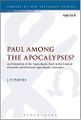 2016 * Davies.jpg 338 × 499; 20 KB
 2016 Blackwell.jpg 332 × 499; 50 KB
 2017 Bowens.jpg 231 × 346; 4 KB
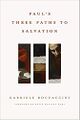 2020 * Boccaccini.jpg 333 × 499; 13 KB
 2020 Campbell.jpg 331 × 499; 25 KB
 2021 Scott.jpg 314 × 500; 34 KB
 2022 Davies.jpg 1,000 × 1,500; 177 KB
 2022 Stewart.jpg 668 × 1,000; 28 KB


